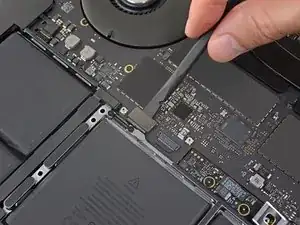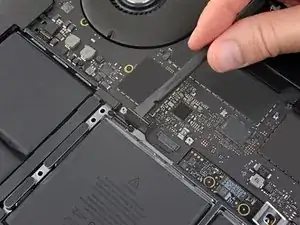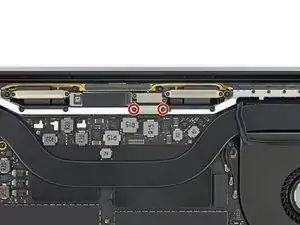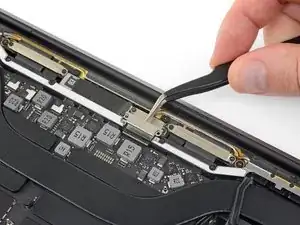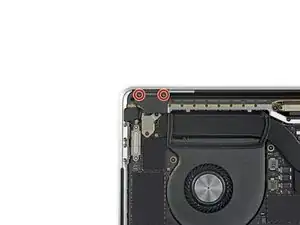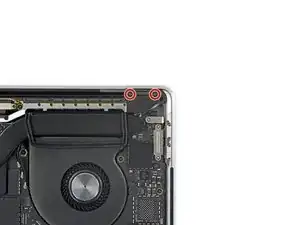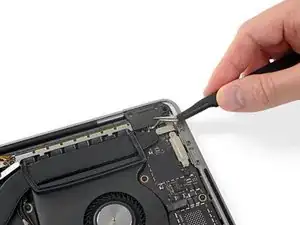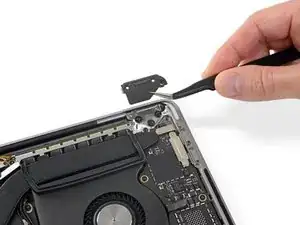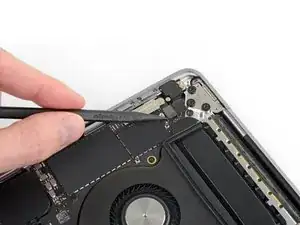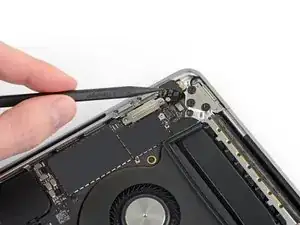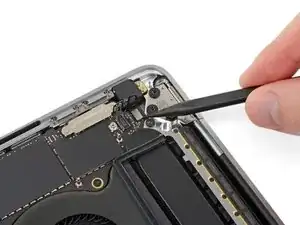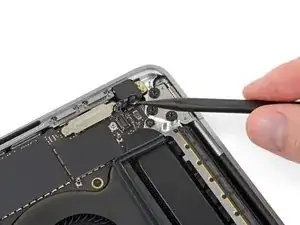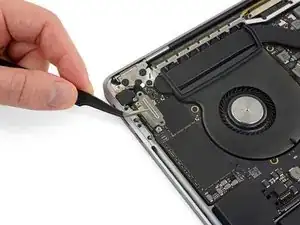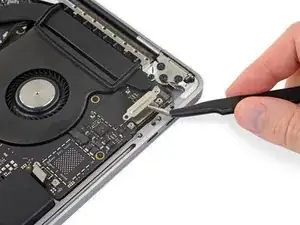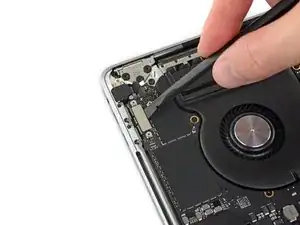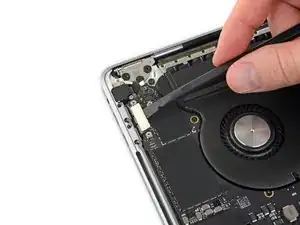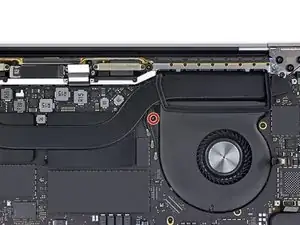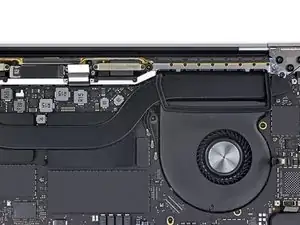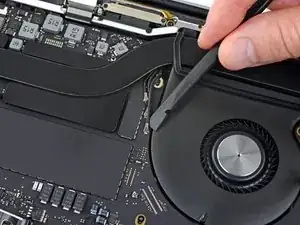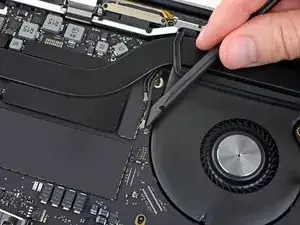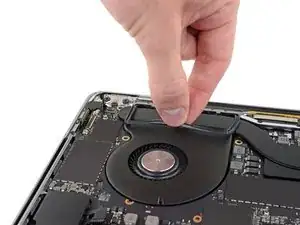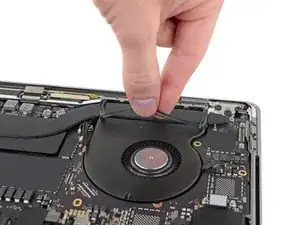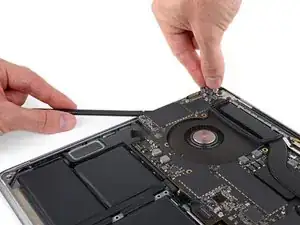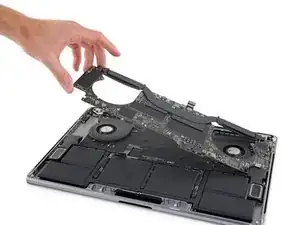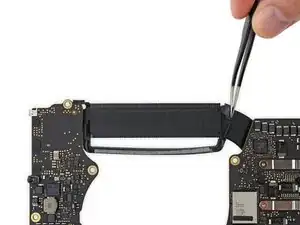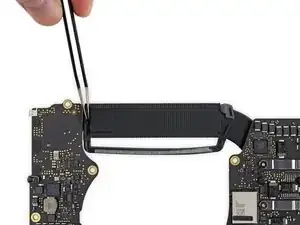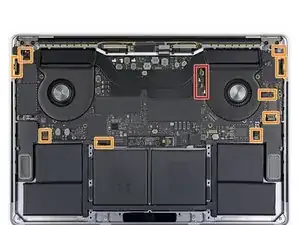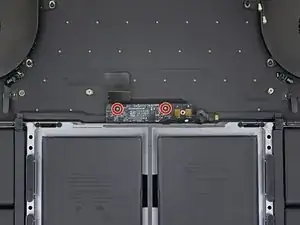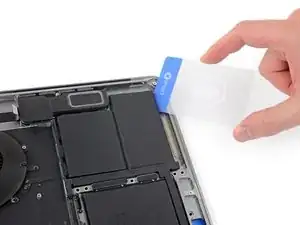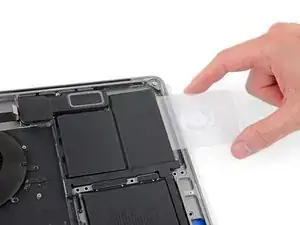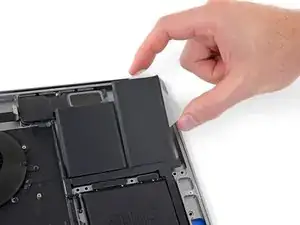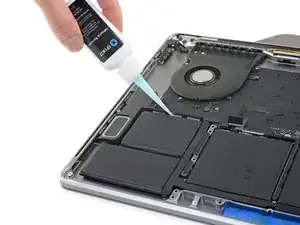
Introducción

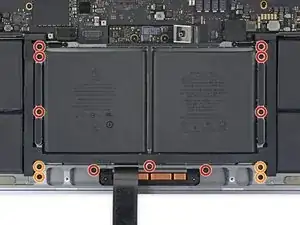
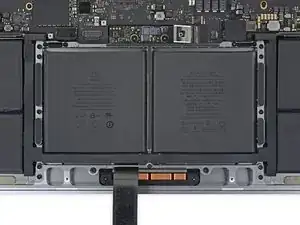
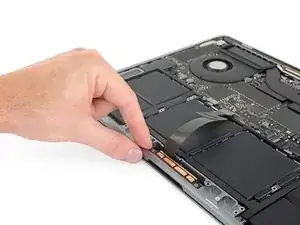
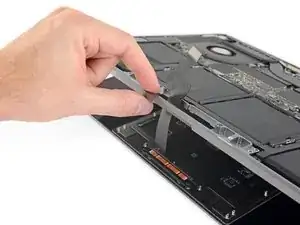
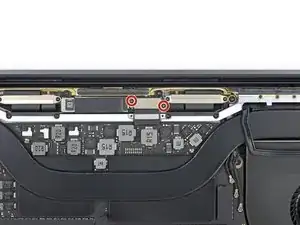
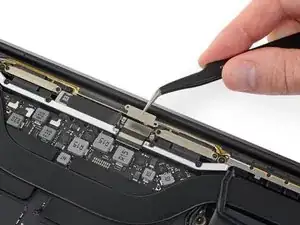
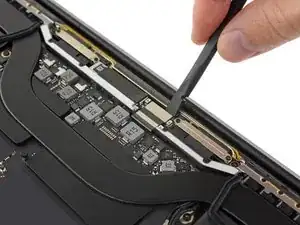
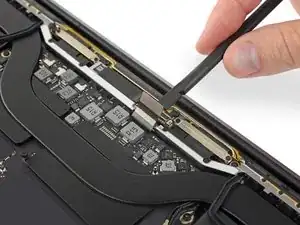
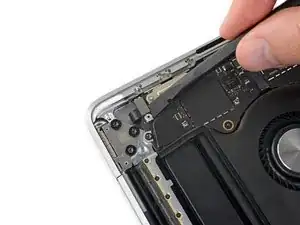
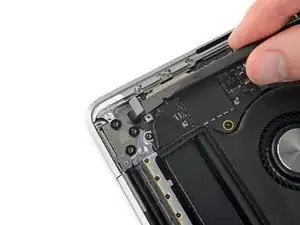
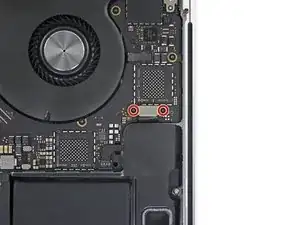
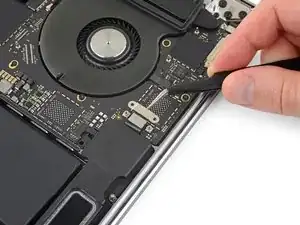
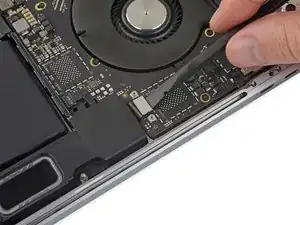
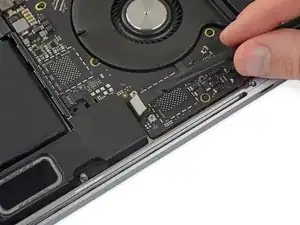
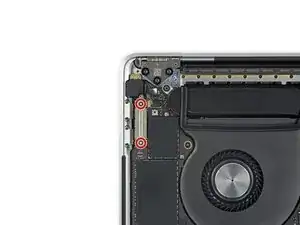
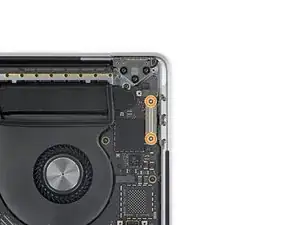
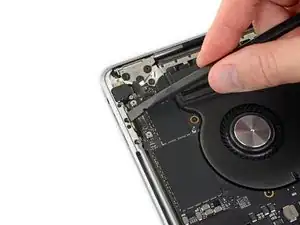
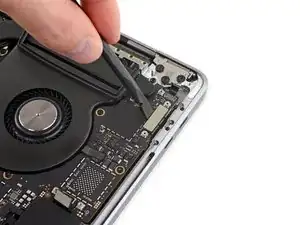
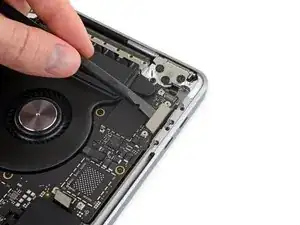
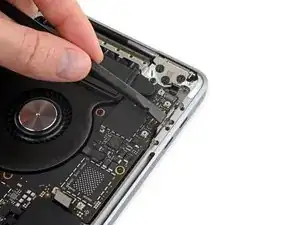
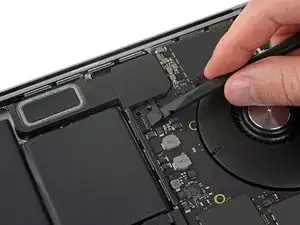
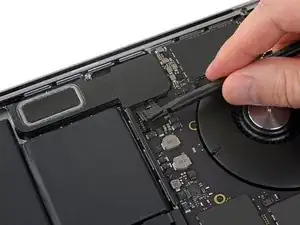
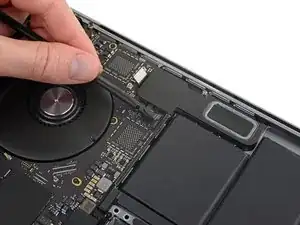
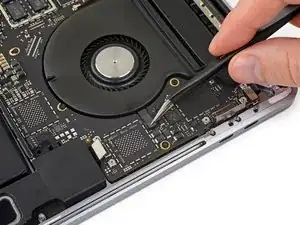
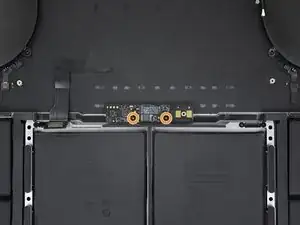
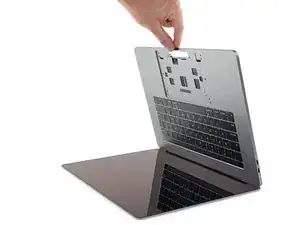
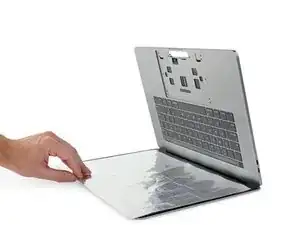
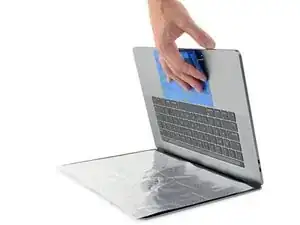
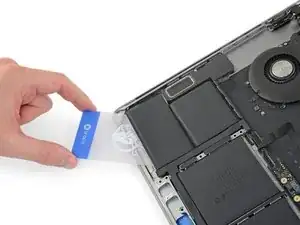
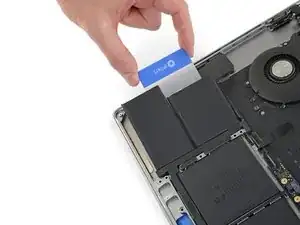
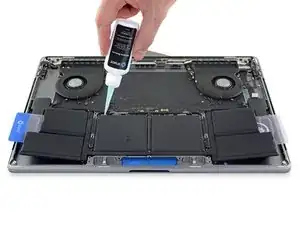
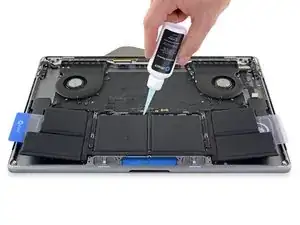
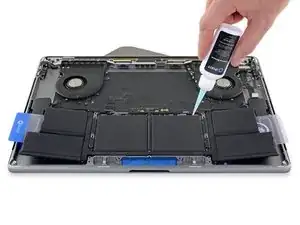
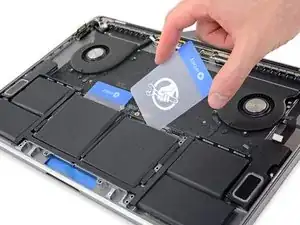
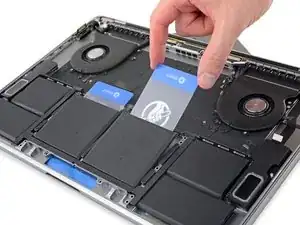
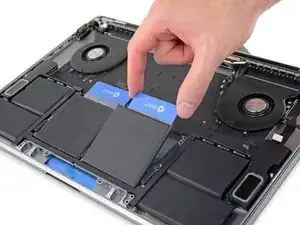
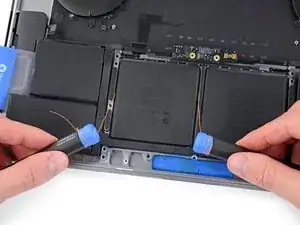
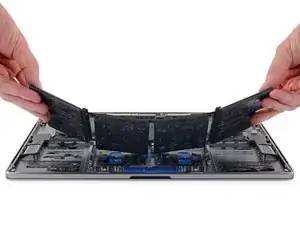
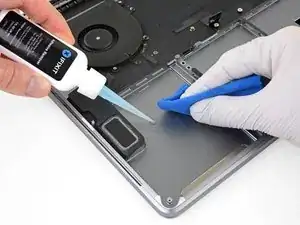
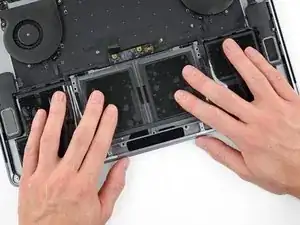
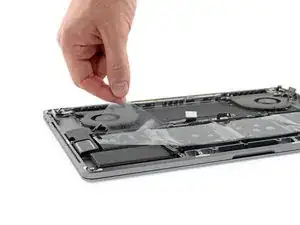
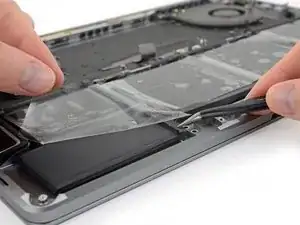
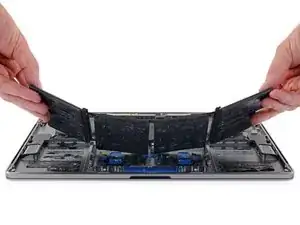
Sigue estas instrucciones para extraer con seguridad la batería pegada de tu MacBook Pro con un kit iFixit con removedor de adhesivos. El disolvente líquido en el kit disuelve el adhesivo que asegura la batería, permitiéndote quitarla más fácilmente.

El removedor de adhesivos iFixit es inflamable.Úsalo en un área bien ventilada y no fumes ni trabajes cerca de una llama abierta.

Para minimizar el riesgo de daños, enciende tu MacBook y deja que la batería se descargue por completo antes de empezar este procedimiento. Una batería de iones de litio cargada puede ser muy peligrosa si se perfora accidentalmente. Si tu batería se ve hinchada, toma precauciones adicionales.

Nota: El disolvente utilizado para disolver el adhesivo de la batería puede dañar ciertos plásticos. Sigue todas las instrucciones y ten cuidado al aplicar el removedor de adhesivo.

  1. dLTjRC36EADiCFBK
    dLTjRC36EADiCFBK
    FZYKkYtpGq1QwBO2
    YAOsWGKtCtOGVFRy
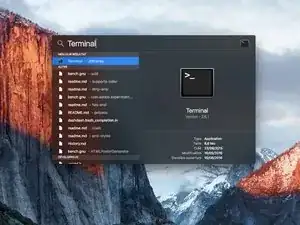
    • Antes de comenzar, debes desactivar la función de arranque automático de tu Mac. Auto Boot se enciende en tu Mac cuando abres la tapa y puede activarse accidentalmente durante el desmontaje. Usa esta guía o sigue las instrucciones abreviadas a continuación para deshabilitar el inicio automático. Este comando podría no funcionar en todas las Macs

    • Enciende tu Mac y ejecuta Terminal.

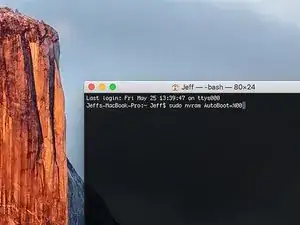
    • Copia y pega el siguiente comando (o escríbelo exactamente) en la Terminal:

    • sudo nvram AutoBoot=%00

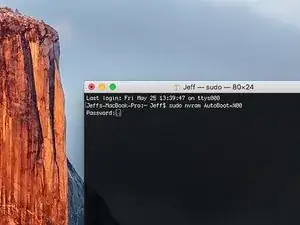
    • Presiona [return]. Si se te solicita, introduce tu contraseña de administrador y vuelve a pulsar [return]. Nota: La tecla de retorno también puede estar etiquetada como ⏎ o "enter".

    • Ahora puedes apagar con seguridad su Mac y abrir la carcasa inferior, sin que se encienda accidentalmente.

    • Cuando hayas finalizado la reparación y se haya vuelto a ensamblar su Mac, vuelve a habilitar el inicio automático con el siguiente comando:

    • sudo nvram AutoBoot=%03

    Is this step necessary? I can’t perform this step as I am attempting to repair water damage and need to remove logic board & most likely replace the battery.

    Macrepair SF -
    @mac_medic You definitely don’t want the power coming on while the board is wet. In your case, I think powering on the machine to disable Auto Boot would do more damage than it prevents. I agree, skip this step and be prepared to disconnect the battery quickly if the laptop automatically powers on. Good luck!

    Jeff Suovanen -
    Thats right! You don't want power running while working on your logic board.

    Dan -
    This did not work when running High Sierra.

    Kyle B -
    Tried this on a 2018 MBP 13” Touchbar (there’s no iFixit guide for this model yet). Need to replace a broken screen.

    Luckily I managed to connect to an external screen (Cmd-Down Brightness to switch displays) and enter above command. Seems to work, but there’s another problem with this model - it powers up as soon as any key is pressed……. ffs <gnashes teeth>

    Cool_Breeze -

    I unscrew the battery first and wrap electrical tape over the logic board battery connector before attempting any repairs to the board. Haven’t had any problems yet and I’ve worked on about 10 of these models already. Also when you open the bottom case use a suction cup at the bottom and pull up then run a plastic spudger along the edges to disconnect the clips. Also only use a plastic spudger on the board. Saw a youtube video from a repair shop and he did not disconnect the power and used all metal tools during the entire process of removing the board. His last step was to disconnect the battery terminal.

    Brian -

    Is this step necessary if my mac can turn on? Battery fully dead(

    Nursat b -

    BEFORE YOU START: The included torx head stripped off before I was done (and you might need an additional T4) so stop now and go buy a good one. Also they fail to warn you above to get some blue threadlocker ahead of time.

    Jason Sherron -

    This command did not work for me and I read that sometime in later 2020 Apple stopped this command from working…any ideas on a work around?

    Patrick Machacek -

    Not able to do that with damaged screen

    richardjgreen -

    If you have a damaged screen you can still use a converter from thunderbolt (USB 3) to HDMI and plug your Macbook Pro to your TV as monitor display. Just make sure to chose the right Source (HDMI IN) in your TV. I did it and to make it work I unplug and plug again in my Macbook and so I could disable the Auto boot

    Roberto Sanchez Bustos -

    Hi. This does not work on 2018 13” MacBook Pro with Touch Bar. I did exactly this to disable auto boot. But when I check by using nvram -p it says: auto-boot true. Am I doing something incorrectly? I did everything step by step. Copied and pasted the sudo command, pressed enter and then entered my password. I have Big Sur 11.1 installed. Is there any other way since I need to replace the screen. Thank you. Adrian

    Adrian Vizik -

    Hi everyone. This is also a little pointless if you can’t see anything on the screen, and you don’t have a display adapter to USB C to display it. I agree with Brian about removing the back and disconnecting the battery cable before you even think about opening the lid of the MacBook. Applying the insulation tape is also a handy little tip that just makes sure there is no way to discharge from either the board or battery.

    Roberto Enrieu -

    running `nvram -p | grep 'AutoBoot'` in terminal verifies that it was accepted

    result: `AutoBoot %00`

    Marek Polák -

    Running Big Sur 11.6.7 on a 2019 16" MBP, it's "auto-boot". So it's: nvram -p | grep 'auto-boot' to display the current state, the default is true - and then to change it, sudo nvram auto-boot=false which turns it off.

    Ed Mechem -

    This step is completely unnecessary if you follow the guide to disconnect the battery properly. Just put some tape between the battery and logic board connection to prevent it from accidentally touching and therefore powering on the laptop.

    Grant Ormsby -

    It took me a few tries to make this command work, as I was able to copy and paste the command into Terminal, but could not type in my laptop’s password. I finally typed my password into a text document, copied it (command C), and then pasted it into Terminal and it worked.

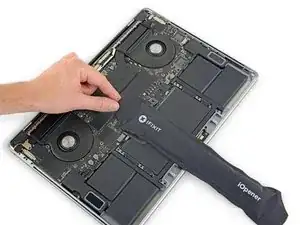
    tommy404 -

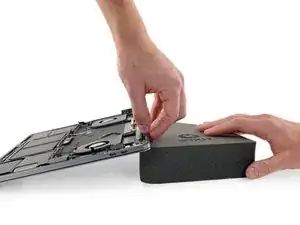
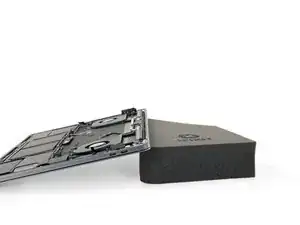
    I didn’t do this. Mine never auto-booted before I replaced the battery. Now it does.

    hatuxka -

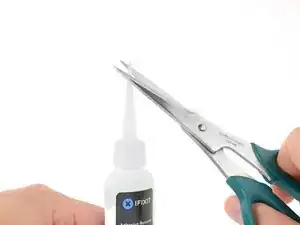
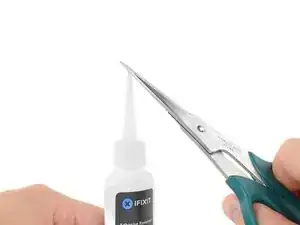
    BEFORE YOU DO ANYTHING - CHECK THE BATTERY!

    I-fixit sent me a bad battery, which I didn’t realize until it was already install. They sent me a new one, but I wasted hours uninstalling and reinstalled.

    Get a volt meter and measure the voltage on the output of the battery pack. If it reads 0 V, SEND IT BACK. It should read over 2 V.

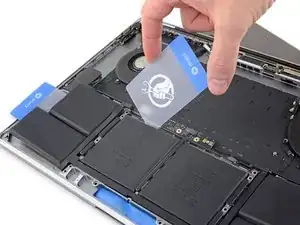
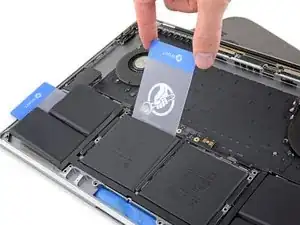
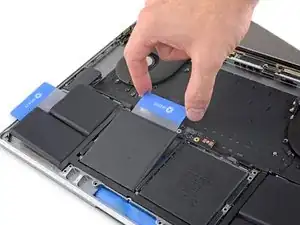
    bcardanha -

    When I did this from Terminal.app within Recovery Mode, the “sudo” was not recognized but I could invoke it without the sudo part. It seems to have been accepted when looking at “nvram -p”

    johann beda -

    When in Recovery Mode, you already have superuser powers. So you don't need to prefix commands with the sudo command to invoke them with root privileges; you already have them. Do a pwd (print working directory) after opening Terminal in Recovery Mode, and you'll see that you're in the root user's directory.

    Ed Mechem -

    I received the battery kit for my 2018 MacBook Pro and as per the above comment from bcardanha - Oct 12, 2021, I checked the voltage on the pads marked + and - . It was zero volts so I panicked a bit.

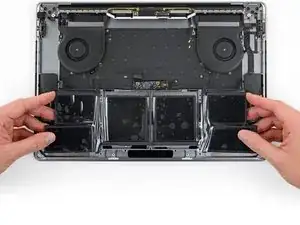
    I sent a message on the iFixiT Facebook page and I got no reply. I finally found the customer service email for Ifixit Europe and sent them an email voicing my concern as I was not keen to work for couple of hours just to discover that the battery is faulty. I had an almost instant reply on the email (kudos to them) and they adviced me to go ahead and install the new battery as the voltage measured when battery is not connected is not relevant.

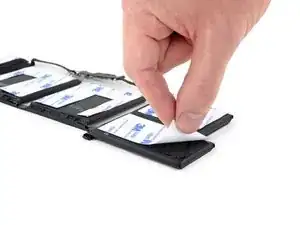
    I took a leap of faith and after two hours… the new battery showed 50% charge and everything seems to be working just fine. I am happy it worked.

    Mircea Comanici -

    After removing the old battery and installing the new battery I powered up the MBP before screwing the bottom on. I discovered the my keyboard would not function. It took a few hours of investigation and frustration that I discovered the track pad power ribbon had become partially dislodged from the trackpad. I was able to see that this through the little machined slot where the battery sat. I had to remove the trackpad to reinsert the power ribbon back into the connector in the trackpad. after reassembling and reinstalling the battery etc the keyboard worked. Just food for thought if your run into the keyboard issue.

    Ed Mease -

    This should be the default. IMO I tell you to power on - not the lid.

    G Sena -

    Est ce que cela fonctionne sur un macbook pro 2017 sans touchbar ?

    maël muzelet -

    Bonjour Maël, oui, ce tutoriel concerne "les MacBook Pro 2016 (et plus récents) et les MacBook Retina 12" 2017 (et plus récents)"

    Claire Miesch -

    Excellent instructions. I was able to follow and install the new screen. I recommend that you get a good set of tools before you begin. I started with an inexpensive repair kit bought online. The Penta and torx bits failed. I bought an IFIXIT kit with quality bits and I was able to do everything I needed.

    Tom Markham -

    If you're not running an admin account the sudo command won't work (which honestly, you should not be running admin). Rather than logging in to your admin amount via the OS, in the terminal type "login [admin username]," then the password and you'll be able to do the sudo command as described above. Once you're complete, type "logout [admin username]" and you'll be good to go. Obviously replace [admin username] with whatever the account name for your admin user is.

    arichard2401 -

  2. 5iYIgSZgIU6hkP1B
    5iYIgSZgIU6hkP1B
    UVKOsGSvaL1OsSL3
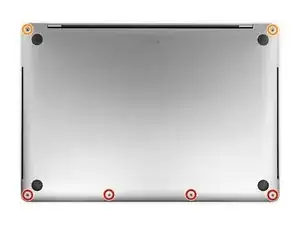
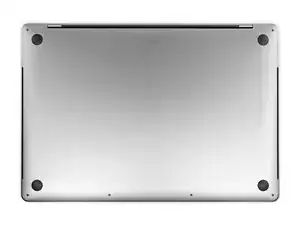
    • Apaga completamente y desenchufa tu MacBook Pro antes de comenzar. Cierra la pantalla y da vuelta la computadora portátil boca abajo.

    • Usa un destornillador Pentalobe P5 para remover lo seis tornillos que sujetan la caja inferior:

    • Cuatro tornillos de 4.7 mm

    • Dos tornillos de 6.6 mm

    • Ten en cuenta la orientación de los tornillos a medida que los retires; es necesario reinstalarlos con un ligero ángulo.

    • A lo largo de esta reparación,haz un seguimiento de cada tornillo y asegúrate de que vuelva exactamente de donde salió para evitar dañar tu dispositivo.

    I miss a printable template to leave the screws and removed parts on it for future identification when reassembly, linked maybe with the location in the Macbook, or with the number of the step.

    Juan Ignacio Fernández García -

  3. ijkfCfPMSRX2ALo2
    ijkfCfPMSRX2ALo2
    5CkAq3GH4yfvDTM5
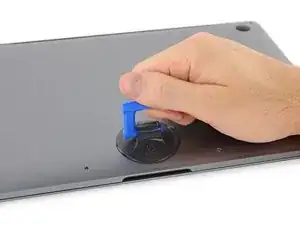
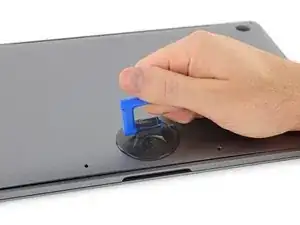
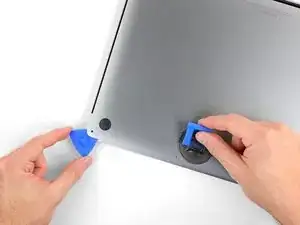
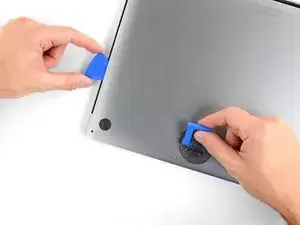
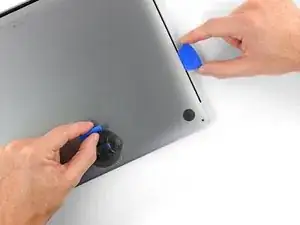
    • Presiona una ventosa en su lugar cerca del borde frontal de la caja inferior entre los orificios de los tornillos.

    • Levanta la ventosa lo suficiente como para abrir una pequeña grieta debajo de la caja trasera.

  4. 3tccyXXDSgVUfV5r
    3tccyXXDSgVUfV5r
    dGSZtjC2B25WfTqZ
    LkbLcUdZnPtyUlDZ
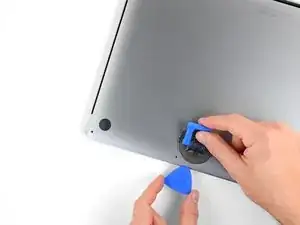
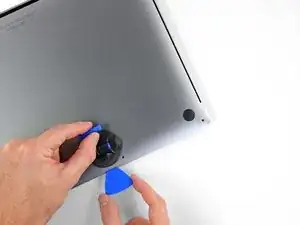
    • Desliza la esquina de una púa de apertura en la grieta que creaste por debajo de la caja inferior.

    • Desliza la púa de apertura alrededor de la esquina más cercana y luego hasta la mitad del lado de la MacBook Pro.

    • Esto libera el primero de los clips escondidos que sujetan la caja inferior. Deberás sentir y escuchar que el clip se libera.

  5. HOVvMHuquXdBar2x
    HOVvMHuquXdBar2x
    oFJCHJDsnpdUHHUU
    ODWHnoCuXGXGKJla
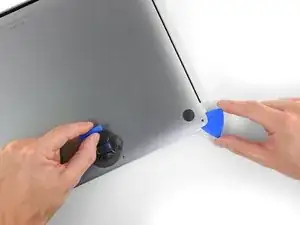
    • Repite el paso previo en el lado opuesto utilizando tu púa de apertura para liberar el segundo clip.

  6. cuTtNQlkiufuESrG
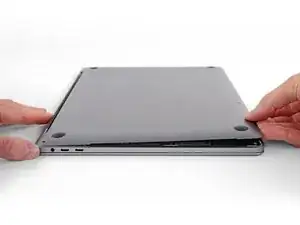
    • Levanta el borde frontal de la caja inferior (el lado opuesto de la bisagra de la pantalla) justo lo suficiente como para deslizar tus dedos por debajo y conseguir una buena sujeción.

    • Hay dos clips adicionales escondidos en la mitad de la tapa que podrían liberarse en este momento, si no lo han hecho todavía.

    • No levantes demasiado y no intentes remover la caja inferior aun.

  7. rXaRTOtGXtFtIpF5
    rXaRTOtGXtFtIpF5
    AlvVmxKf6DlNLakh
    WJMFC2MdulDBxoXv
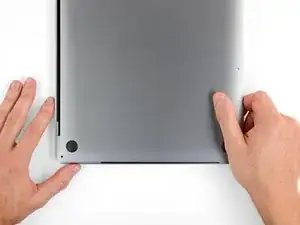
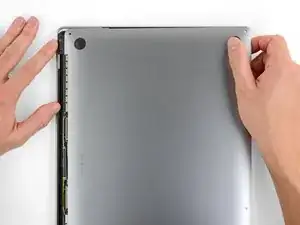
    • Tira de la caja inferior firmemente hacia el borde frontal de la MacBook (lejos del área de la bisagra) para separar el último de los clips que sujeta la caja inferior

    • Tira primero de una esquina, luego de la otra.

    • Tira hacia un lado, no hacia arriba.

    • Esto podría requerir mucha fuerza.

    With the amount of force needed to carefully pull the back panel out, this caused the back panel to scratch the battery. I don't see or hear any expansion, but this still has me concerned.

    gladgura -

    this step must require a lot of force. I tried to pull it with the plastic hookie thing from the ifixit set by hooking it in one of the screw holes — the tip of the hookie thing broke.

    Oleksii Toldaiev -

    The amount of force required for removing the bottom cover is absolutely ridiculous. Almost feels like i'm about to push my MacBook towards the wall the second it comes off.

    Be careful, I ended up breaking 2 grounding pins on the motherboard last time I tried opening my computer up.

    techtalkf -

    PLEASE DON'T PULL!!!

    Instead just gently push with plastic pick from the other side (where vents outputs are) towards the center... Cover will very easily open that way.

    I hope iFixit will correct this step.

    Kamil Roman -

    Came here to share exactly this.

    Robert -

    That's definitely how this step should be done. Thanks!

    VovS -

    I used a screwdriver at 45 degrees angle and pushed the cover from the hinges, it worked really smooth. I had it close to the corners.

    Martin Lundgren -

  8. 1eexZLVG2E3kwXhw
    1eexZLVG2E3kwXhw
    Koax55WG2pDjZ1MC
    WUXJn5rl13iOX11X
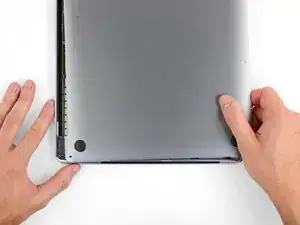
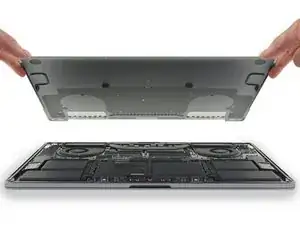
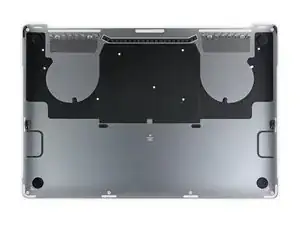
    • Remueve la caja inferior.

    • Para volver a instalar la caja inferior:

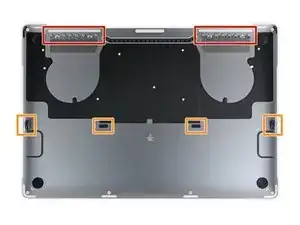
    • Colócala en su lugar y alinea los clips deslizantes cerca de la bisagra de la pantalla. Presiona y desliza la tapa hacia la bisagra. Debe dejar de deslizarse cuando los clips se enganchan.

    • Cuando los clips deslizantes están completamente enganchados y la caja inferior se ve correctamente alineada, presiona firmemente la caja inferior para enganchar los cuatro clips ocultos. Deberías sentirlos y oírlos encajar en su lugar.

    If I had it all to do over, again, I would blow out the dust with compressed air at this point. During the disassembly, I kept encountering little dust bunnies, and I was very worried that one would get caught in one of the connectors when I plugged everything back up (which wouldn’t get discovered until I put it all back together and tried out all of the components).

    Joe Emenaker -

  9. PTIZqDdpESIEg6iK
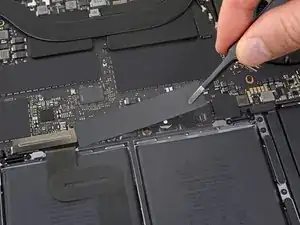
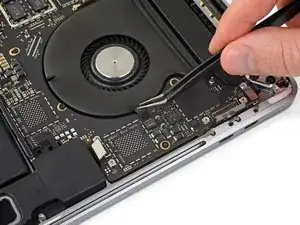
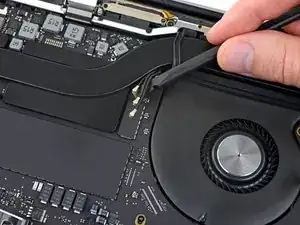
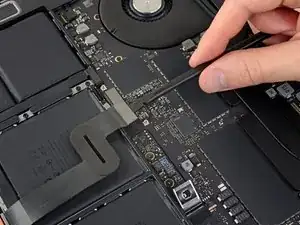
    • Despega y remueve la etiqueta adhesiva aislante de la placa de la batería en el borde de la placa lógica más cerca de la batería.

    • Si la tapa no se despega fácilmente, aplica un poco de calor con un iOpener, secador de pelo o pistola de calor para ablandar el adhesivo e intenta nuevamente.

    • Si la tapa no encaja de forma segura cuando vuelves a ensamblar el dispositivo, intenta rotarla 180 grados. Debe estar orientada correctamente para que las almohadillas adhesivas hagan contacto con los tornillos de la placa.

  10. MZhqvhivJc6ltuBI
    MZhqvhivJc6ltuBI
    a5jICxWI6SwpreQK
    ur1oBPkypLAwkAay
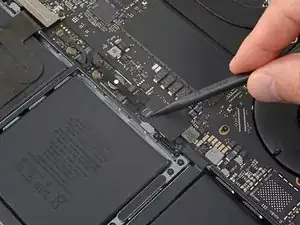
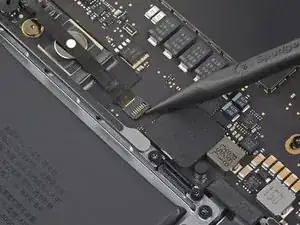
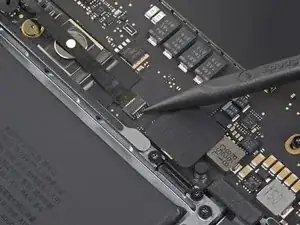
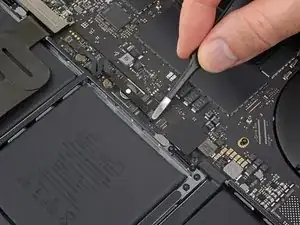
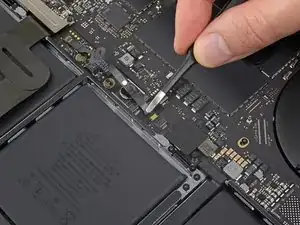
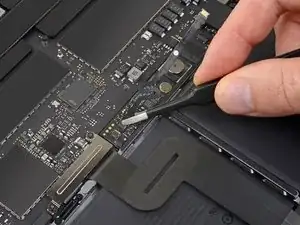
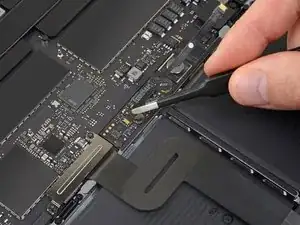
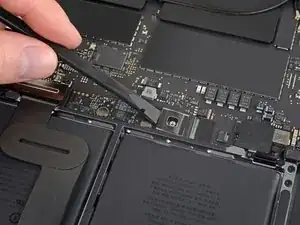
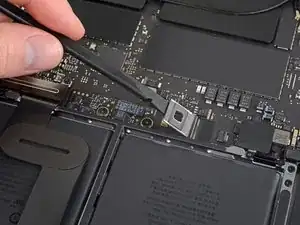
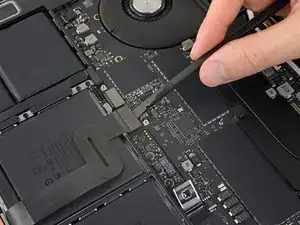
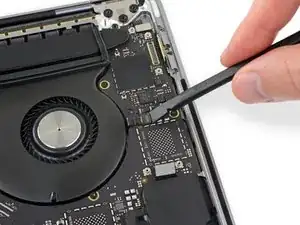
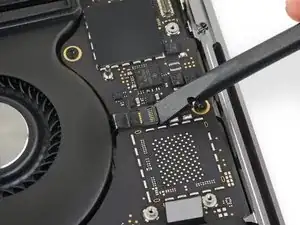
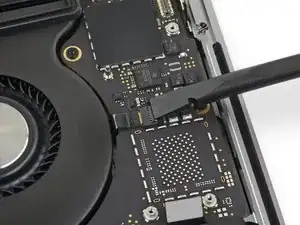
    • Despega la cinta que cubre el conector de cable de datos de la placa de la batería.

    • Usa un spudger para levantar suavemente la pestaña de bloqueo del conector ZIF para el cable de datos de la placa de la batería.

  11. SBuNWrrEsnEHWE5U
    SBuNWrrEsnEHWE5U
    WSVYglC4kJSVXbLA
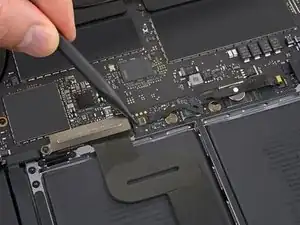
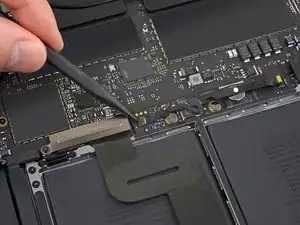
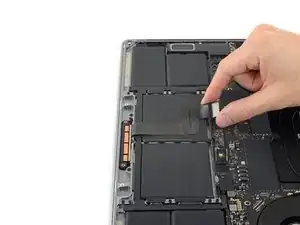
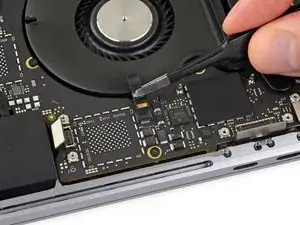
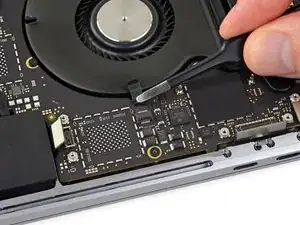
    • Desconecta el cable de datos de la placa de la batería deslizándolo fuera de su zócalo en la placa lógica.

    • Desliza en paralelo a la placa lógica, en la dirección del cable.

  12. 3QMLTKDDDaOIEXZk
    3QMLTKDDDaOIEXZk
    QJeqYMjSJObGSxLc
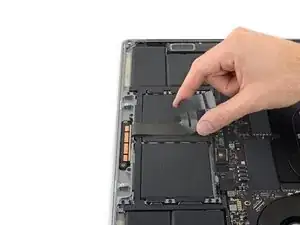
    • Levanta y desconecta la solapa de bloqueo en el conector en el extremo opuesto del cable de datos de la placa de la batería.

  13. doyrMkF4Ol2fsUCf
    doyrMkF4Ol2fsUCf
    FlF4ZwiPrAxEkwSi
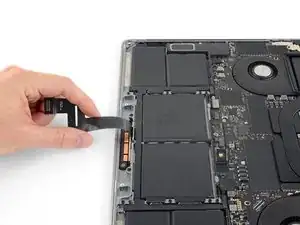
    • Desliza el cable de datos de la placa de la batería de su zócalo en la placa de la batería y remuévelo completamente.

    • Ten cuidado de no instalar este cable al revés. Cuando lo instales correctamente. el autoadhesivo blanco indicador de líquido debe estar mirando hacia arriba, posicionado directamente sobre el tornillo del conector de alimentación de la batería.

    Bonjour, super Tuto, petite question elle sert a quoi cette nappe , et quesqui se passe si elle est pas branché ?

    Jorgio -aigleBrun- -

  14. YCrvX4dDTLFRo2He
    YCrvX4dDTLFRo2He
    REFmgM15LSgj5I14
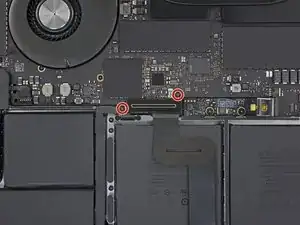
    • Usa un destornillador T5 Torx para remover el tornillo panqueque de 3.7 mm que sujeta el conector de alimentación de la batería.

  15. rmLuSU2NmsUdQIQp
    rmLuSU2NmsUdQIQp
    aMGREyB4myE324Ug
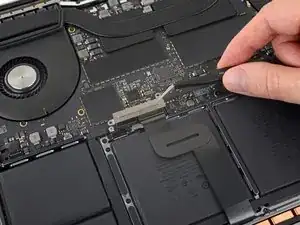
    • Usa un spudger para levantar suavemente el conector de alimentación de la batería, desconectando la batería.

    • Levanta el conector lo suficientemente alto para mantenerlo separado de su zócalo mientras trabajas. Si hace contacto accidentalmente, podría dañar tu MacBook Pro.

    Put a little bit of insulating tape over the terminal to be safe.

    Brian Tibbels -

  16. sK4lqBHxryavnDid
    sK4lqBHxryavnDid
    oF22XSHRWEFwHmoR
    • Utiliza un destornillador Torx T3 para quitar los dos tornillos de 1.9 mm que sujetan el soporte de la tapa para los conectores del cable del teclado y el trackpad.

    • Remueve el soporte.

    I didn’t have T3 but T4 worked ;)

    Martin Lundgren -

  17. ncIQWCHpRGO1fSb2
    ncIQWCHpRGO1fSb2
    yKukLfBQSF5SR1va
    • Usa un spudger para desconectar el cable del trackpad levantando su conector directamente de la placa lógica.

  18. noPvQ2CLs1jptX2p
    • Aplica calor moderado al cable plano del trackpad para suavizar el adhesivo que lo sujeta a la batería.

    • Puedes usar un iOpener, un secador de pelo o una pistola de calor, pero ten cuidado de no sobrecalentar la batería. El cable debe estar caliente, pero no demasiado caliente para tocarlo.

  19. bRNYL1JeZ2MUeBe2
    bRNYL1JeZ2MUeBe2
    XJTjmkOpAHj1XPso
    irj3TcmYrfGAxaAU
    • Retira con cuidado el cable del trackpad de la batería y empújalo.

    • No dobles ni rasgues el cable. Si tienes problemas, no lo fuerces, aplica más calor e intenta nuevamente

  20. JDrgfAWr1UO6RLKu
    JDrgfAWr1UO6RLKu
    tCIssjKYVvECMJsB
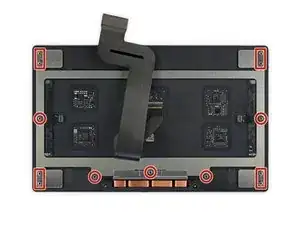
    • Utiliza un destornillador Torx T5 para quitar los 13 tornillos que sujetan el ensamblaje del trackpad:

    • Nueve tornillos de 5.8 mm.

    • Cuatro tornillos de 4.9 mm.

    • Estos tornillos se ven muy similares, así que no los mezcles.

    • Estos tornillos pueden aflojarse con el tiempo debido a la acción de hacer clic en el panel táctil de Force Touch. Agregar un pequeño fijatornillos azul al instalarlos puede ayudar a mantenerlos seguros.

    • Instala los tornillos sin apretar y verifica la alineación del trackpad antes de apretarlos.

    I dont have the “clicky” feedback from my trackpad anymore - please advise how to fix this

    Shadi Saif -

    (MacBook Pro 2019 15” 2 years old) There are 4 screws (2 on the left and 2 on the right, each pair held down by a black metal piece) next to the uppermost 5.8mm screws. What is the size/kind of screw are these? I’d like to purchase these missing items? Please help. A suspicious technician tried to scam me out of money. I asked for my computer back before they could charge me. I decided to do the repairs myself. When I received my laptop back and followed Ifixit instructions I found 2 screws missing and they replaced the original with an unrecognizable rusty screw on the farthest left screw hole, and the black metal pieces were missing as well.

    Alathia Kaye -

  21. dbGJfyNAFLmgI6OQ
    dbGJfyNAFLmgI6OQ
    d31aHAXyDOBZbn6q
    WVy1FAO3B2SbT1ie
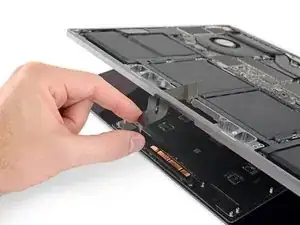
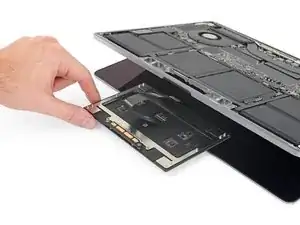
    • Abre la pantalla ligeramente, pero mantén el MacBook al revés. El conjunto del trackpad debe separarse y quedar plano en la pantalla.

    • Pasa suavemente el cable plano del trackpad a través de su ranura en el chasis.

    do not turn the touchpad over, as there are 4+5 very thin spacers/washers, and you might lose them. only the next step warns you about this. dont be me!

    George Kiss -

  22. yIm1JNUtPSAhyjoc
    yIm1JNUtPSAhyjoc
    AqeMok2AxKKOdhLZ
    NHbfjLZpScjEKpF5
    • Cuando retires el conjunto del trackpad, ten mucho cuidado de no perder las nueve arandelas metálicas pequeñas que se apoyan en los postes de los tornillos. (Volarán y se perderán con muy poca provocación).

    • Remueve el ensamblaje del trackpad.

  23. ZWY2wWJIA2sohYJR
    ZWY2wWJIA2sohYJR
    VOv2slGFGMLOQBFe
    • Usa tu spudger para desconectar el teclado levantando su conector directamente de la placa lógica.

  24. 2ACOrmEBuVLGGMxV
    2ACOrmEBuVLGGMxV
    ESJgAWhAIByUZn5u
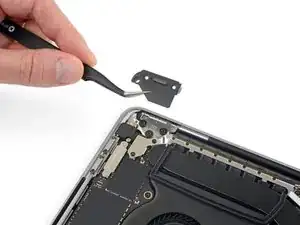
    • Usa un destornillador T3 Torx para remover los dos tornillos de 3.5 mm que sujetan la tapa del cable flexible de la placa de la pantalla.

    • Remueve la tapa del cable flexible de la placa de la pantalla.

    I was able to complete this procedure successfully without removing the logic board. I don’t use any liquid adhesive remover. I employ A rubber type silicon rubber-semi stiff spatula used for putting icing on cakes. Use careful leveraged prying, sliding under battery to break the adhesive seal. Also careful application of heat with a heat gun being careful to not damage the speakers. I remove all logic board screws, disconnect all service cables including USB C caps on both sides. The goal is to be able to carefully ”lift” The lower edge of logic board most proximal to the battery enough to allow the ribbon cable to clear the “ridge” that is on rear edge of the battery compartment, Thus allowing you to pull the battery back horizontally towards The front edge laptop and out. I use popsicle sticks to keep the logic board lifted. Careful not to bend the board or break it! You need about 1/8” of clearance. 99% isopropyl alcohol libera dabbed on with a Q-tip to adhesive residue will clean it off.

    Macrepair SF -

    I had some issues using my T3 bit for most of these screws. Had to use a T4. Strange because I do not use either of those bits often, so I would assume they are still in good shape. Using a T3 felt like I was going to round out each of the screws. Wonder if anyone else experienced this same thing? I'm using the 'Pro Tech Toolkit' by iFixit.

    Michael Stein -

  25. h3LUEOUmG1Qa4FHB
    h3LUEOUmG1Qa4FHB
    jTMKbKYBPoyAAij6
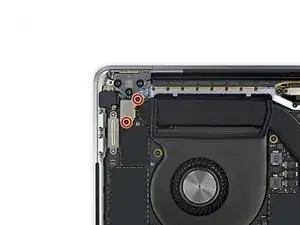
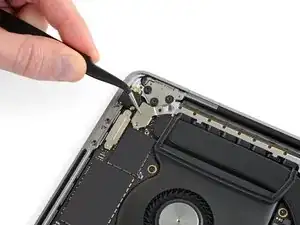
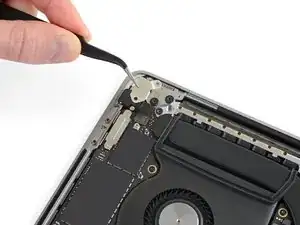
    • Usa un destornillador T3 Torx, remueve los dos tornillos de 1.7 mm que sujetan el soporte para el conector del cable de la placa de la pantalla.

    • Remueve el soporte del conector del cable de la placa de la pantalla.

    Help! I stripped the T3 Screw!! ?

    J S -

    I also did this

    jerryrobsonjr -

    Both of these screws also stripped for me. I’m not sure taking extra care would have helped: they stripped almost instantly and felt corroded. I basically continued by carefully manually turning out the right screw head using a regular, (slightly larger than T3) philips driver (and other small tools) until the head popped off the screw and one side of the bracket released. Then the bracket can be lifted and the other screw can be loosened using upward pressure. Upon replacement I basically used a small amount of high viscosity “gel” super glue (or epoxy) to reattach the right side of the bracket.

    capecodnative -

    Ok, I stripped it too. Feels like it isn't a t3 screw... Using the t3 bit from ifixit kit. Have a bite when turning clockwise but won't bite counter clockwise

    Chi Wang -

    Tried with another T3 bit (was using the T3 bit from ifix battery kit) and manage to remove one screw. The other one stripped too much but followed the recommendation from above comment about lifting the bracket

    Chi Wang -

    And now? It's definitely not T3. What the hell do I do now...

    Marina Llopis -

  26. hWNUVuXxYGkOQLuW
    hWNUVuXxYGkOQLuW
    3lW4x2iOsthCyeb2
    • Levanta el cable flexible de la placa de la pantalla directamente de su zócalo para desconectarlo de la placa de la pantalla.

  27. NGFfbbntTcLfE6AN
    NGFfbbntTcLfE6AN
    TLBZSWgTQu1TCaxo
    • Utilice un destornillador Torx T3 para quitar los dos tornillos de 2.0 mm que sujetan cada tapa de la bisagra (dos tornillos en cada lado).

  28. WESQjibowRGIOB4y
    WESQjibowRGIOB4y
    VQnIDOppIXlPfvOS
    dIZRRRhATdIGluks
    • Remueve las dos tapas de bisagra.

  29. qxkZlsQjNTiqcykg
    qxkZlsQjNTiqcykg
    xxSD5pgXaB5CtOjl
    qEuLVDOGNShUMJU4
    • Utilice un controlador Torx T3 para quitar los dos tornillos de 2.4 mm que sujetan el soporte de la cubierta para los conectores de cable de la toma de auriculares y Touch ID.

    • Remueve el soporte.

    Here is a first! I did not notice this when disassembling but spent a bit of time validating I had reassembled things correctly. After 35 years of this stuff, you don’t see much new - just smaller. !

    —->The 2.4 mm screw closest to the hinge screws into the logic board screw circled in green T8 (larger head)at step 47.

    Try finding that screw in your bucket of spares!

    Brian Eustis -

  30. K5fPx6JlRJOUXRMt
    K5fPx6JlRJOUXRMt
    k4hHBkxVZcreXFY6
    • Desconecta el conector flexible de la toma de auriculares levantando su conector de la placa lógica.

  31. LAcQL4JQvGZYGWGU
    LAcQL4JQvGZYGWGU
    GWgliFUh24bmRuLB
    • Desconecta el botón de inicio y sensor de Touch ID levantando su conector de la placa lógica.

    This smaller connector cable of the touch ID sensor that sits underneath the power sensor connector is easy to overlook when replacing the logic board. It is small & short and can easily hide. Make sure you account for it when placing the LB in and before screwing it down.

    Macrepair SF -

  32. JxwuAZXOHeF3CfYO
    • Usa un destornillador Torx T3 para quitar el tornillo de 1.3 mm que sujeta el soporte de la tapa del conector del digitalizador Touch Bar.

  33. gjGOmxTJPlV5Pcoi
    gjGOmxTJPlV5Pcoi
    ajmGXYArtoeYfTZx
    BQ33qY5wqiop1X2p
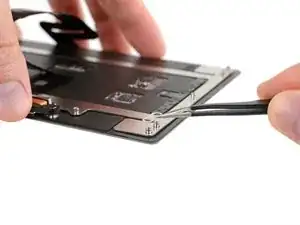
    • Usando tus pinzas, desliza el soporte hacia el borde lateral de la MacBook Pro hasta que la pestaña de retención ranurada en la placa lógica se libere.

    • Remueve el soporte.

  34. OLEyZERLrZmuCWOc
    OLEyZERLrZmuCWOc
    YtBrywD3Z46KJOeH
    • Desconecta el cable del digitalizador del Touch Bar levantándola de la placa lógica.

  35. Z4WLmC4Af1MgSPwC
    Z4WLmC4Af1MgSPwC
    TBEkxgCdmTZxTq3D
    • Usa un destornillador T3 Torx para remover dos tornillos de 1.9 mm que sujetan el soporte para el conector de cable de la pantalla del Touch Bar.

    • Remueve el soporte.

  36. rdtc2HfFhemuFkP5
    rdtc2HfFhemuFkP5
    V1lJDfNAwoMJh5VT
    • Desconecta el cable de la pantalla de Touch bar levantando su conectar de la placa lógica.

    Right above the connector, there might be a chip attached instead of an empty space as shown in the photos. The connector will be close to the part but they are separate, and the connector can be safely removed.

    yqy980210 -

  37. Zg64coNjUyXMTLDc
    Zg64coNjUyXMTLDc
    sfFumwaPW4PM65rF
    • Usa un destornillador T3 Torx para:

    • remover los dos tornillos de 1.3 mm que sujetan la tapa del cable flexible del Thunderbolt que se encuentra a la izquierda.

    • remover los dos tornillos de 1.3 mm de la tapa del cable Thunderbolt a la derecha.

  38. 3knbjJPAymkOLNCS
    3knbjJPAymkOLNCS
    y3lqPE4HW5nqZoLc
    • Remueve los soportes de la tapa de ambos zócalos del cable Thunderbolt.

  39. exkgTpYLnlrp4ZZQ
    exkgTpYLnlrp4ZZQ
    AjPJJxTGA5lLBtP5
    EMn4AYmTfpTaIJEl
    • Usa un spudger para desconectar el cable flexible Thunderbolt del lado izquierdo levantándolo de la placa lógica.

    • Levanta del borde interior, más cercano al ventilador.

    • Con cuidado empuja el conector del cable flexible a un lado para que no interfiera con la extracción de la placa lógica.

  40. LLsCNB1DthkUlIUN
    LLsCNB1DthkUlIUN
    pQTUTCUHTKgBFrqY
    JcyNSZmtHhshuhtq
    • Repite para desconectar el conector del cable flexible Thunderbolt en el lado opuesto.

    • Empuja con cuidado el conector del cable flexible a un lado para que quede espacio para que la placa lógica salga sin engancharse.

  41. JGtZy3HuTUAeBoS3
    JGtZy3HuTUAeBoS3
    dRMCKLupNlCc3a52
    RODaAEUfwKQAvROr
    • Desconecta los dos conectores de altavoces deslizando el extremo plano de tu spudger por debajo de cada cable cerca de su conector.

    • Gira o levanta suavemente para desconectar ambos altavoces.

    Both had a dab of glue underneath. I used heat gun to loosen.

    Macrepair SF -

    On this step, it helped to use the tip of sharp tweezers to open the small metal tab of the connector to the side.

    Rodrigo Damazio Bovendorp -

    After disconnecting the speaker connector, does the speaker just come out, or is it glued or screwed in place? All I need is to Replace the Right Speaker with a New one. This guide gets me to this point but doesn’t address replacing the speaker. Would like to know if it’s more complicated than that before I get started… Thanks

    Would be nice to have a guide just for Speaker Replacement. Thanks

    Chad Gagnon -

    My right speaker doesn't work now because the cable and connector disconnected from the logic board. From one problem to another now... What should I do?

    Blake Johnson -

  42. rpggR1BSd2ivkpCK
    rpggR1BSd2ivkpCK
    Uvg1Erp6vCnduApZ
    • Despega cualquier cinta que cubre el zócalo del conector del cable del micrófono.

    Wenn möglich das Klebeband nicht abziehen! Zwei Schritte weiter bist Du froh darum.

    Stephan Zenger -

  43. jjBThQOLxxBKWtSw
    jjBThQOLxxBKWtSw
    e2dCqFryAVygfQOT
    cZSamwZeQZBWJkFL
    • Abre la solapa de bloqueo en el conector ZIF del cable del micrófono levantándolo hacia arriba desde la placa lógica.

  44. TBowkAlrNvEIkWWt
    TBowkAlrNvEIkWWt
    kbuC4BITFsryhKqX
    • Desconecta el micrófono tirando de su cable hacia el ventilador hasta que se suelte de su zócalo.

    • Si es posible, tira de la cinta adherida al cable, en lugar del cable en sí, para reducir el riesgo de daños.

  45. 3P3EHShbtOjwWNJh
    3P3EHShbtOjwWNJh
    VHL2DsARcfi1pSAC
    • Utiliza un destornillador Torx T5 para quitar el tornillo único de 2.9 mm que sujeta el manojo de cables de la antena.

  46. IxDlbVhlHngl4Cxd
    IxDlbVhlHngl4Cxd
    CKA1yXuOSnccWLUF
    mjRiQRjFyFmNqOS2
    • Desconecta los tres cables de la antena levantando cada uno directamente desde su zócalo.

    • Desliza tus pinzas o el extremo plano de tu spudger debajo de cada cable hasta que esté cerca del zócalo, y luego gíralo o levántalo suavemente para desconectarlo.

    • Para volver a conectar cada cable, alinea el conector directamente sobre su zócalo y luego presiona hacia abajo para que encaje en su lugar.

  47. mdXPZEvBWOLGqRA2
    mdXPZEvBWOLGqRA2
    eMnIAYVCqpZXJAha
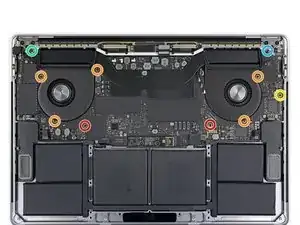
    • Remueve los diez tornillos que sujetan el ensamblaje de la placa lógica.

    • Dos tornillos T3 Torx de 2.6 mm

    • Cinco tornillos T5 Torx de 2.9 mm

    • Un tornillo T5 Torx de 3.7 mm

    • Un tornillo T8 Torx de 3.9 mm

    • Un tornillo T8 Torx de 4.1 mm

    • Durante el ensamblaje, instala estos tornillos sin apretarlos. Ajusta la posición de la placa si es necesario hasta que todos los conectores se alineen y luego ajusta los tornillos.

  48. rCxHE2kgOHPDxy1D
    rCxHE2kgOHPDxy1D
    fkOuMFLayRPhvTCB
    CRooRPymdyPD4OUW
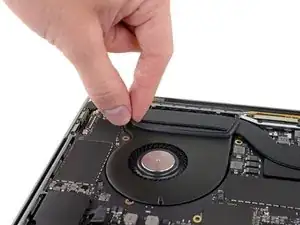
    • Despega (pero no quites) las dos bandas de goma que amortiguan las vibraciones del adhesivo que las sujeta a los ventiladores.

    • Si es necesario, aplica un poco de calor con un iOpener, un secador de pelo o una pistola de calor para suavizar el adhesivo y hacer que los amortiguadores sean más fáciles de separar.

    When replacing the battery, you can leave these, and just lift the logic board, enough so the battery slides out.

    nbeijer -

  49. HpH1yUNwHgwRUfvE
    HpH1yUNwHgwRUfvE
    KbBxQ5UMk2J23kAl
    • El ensamblaje de la placa lógica tiene un espacio muy justo, pero puedes facilitar la extracción insertando un spudger debajo del borde izquierdo y levantándolo ligeramente.

    • No debe haber resistencia al retirar la placa lógica. Revisa todos los cables con cuidado y manténgalos fuera del camino si es necesario para que no se enganchen en el tablero.

    • Levantando desde el lado izquierdo, remueva la placa lógica.

    To ease logic board removal (and especially later for reinstallation), I choose to gently bend each connector away from the logic board & use a little tape to hold them out of the way.

    Tech Medic -

    Is there new adhesive for fans? I’m into deep . 50/50 shot.. I get his back together ..😩

    Gerald Rappaport -

    For me, I didn’t have to remove the MOBO. To be honest i didn’t need to follow the steps that require you to remove certain plugs. It may help to remove the speakers and what not, but other than that you don’t have to remove the whole thing. Also this is from my experience. So don’t get mad at me if it doesn’t work. Goodluck!

    Neo -

  50. xWQpLjChkSyWJpL2
    xWQpLjChkSyWJpL2
    NPkZy33WDRtgefPW
    Aonio6YmPc6dyrSi
    • Al reinstalar el ensamblaje de la placa lógica:

    • Verifica la alineación de los amortiguadores de vibración de goma y ajústalos según sea necesario.

    • Pasa el manojo de cables de la antena a través de la grieta entre la placa lógica y el disipador de calor, y asegúrate de que se alinee correctamente al colocar la placa en su lugar.

    • Verifica que no haya cables atrapados debajo de la placa cuando la instales. Revisa cada lugar marcado con cuidado.

    Would be good to mention (at the end of instructions here) to pay special attention on reassembly that the Touch ID and power button cable does not slip under the logic board at the last moment7

    Wolf Naegeli -

  51. GCK5hsjgAVx5TNyh
    GCK5hsjgAVx5TNyh
    65YNp1D3G5kY4sSG
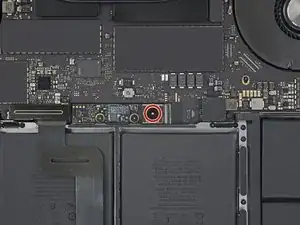
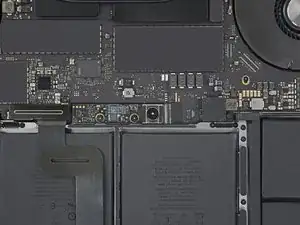
    • Remueve los dos tornillos que sujetan la placa de la batería:

    • Modelos 2016-2017: Usa un destornillador T5 Torx para remover ambos tornillos de 3.5 mm.

    • Modelos 2018-2019: Usa un destornillador Pentalobe P2 para remover ambos tornillos de 3.2 mm.

    On my mid 2018 15.3” i9 MBP the battery board screws were PL1

    Brian Eustis -

    On my mid 2018 15.3 i9 MBP the keyboard cable is farther to the left (as shown at Step 23)! When reinstalling, make sure it is under the battery cable and its connector sticking up between the battery cable and the aluminum battery frame.

    Wolf Naegeli -

    So if I’ve understood correctly, almost all the above could have been skipped if apple just made these two screws accessible? Wow, just wow

    Nathan Skene -

    The screws are accessible, but the ribbon is under the board...

    Chi Wang -

    Dear Chi Wang, which cables do we remove once the logic board has been lifted? In step 49 and further I can only see the keyboard cable (which needs not getting removed) and the battery board cable doesn't look like it is under the board...

    Luca Ciminelli -

    P2 bit end broke unscrewing the second of these screws… Now I have a piece of the bit stuck in the screw head and a MacBook completely disassembled…

    one.dakine.howlie -

    I bought the battery + "kit" pack here and it doesn't include p2 screws. wow.... it seems like you own people don't even know what tools is needed for this? wow... just wow...

    CHIACHE LEE -

    I used P0.8 on my MacBook 2018

    Martin Lundgren -

  52. UY14gncyKxEiGlNC
    UY14gncyKxEiGlNC
    uHfL4bGRkXeVs5Uw
    Tb6VpMY1JdJbFXgZ
    • El remover líquido de adhesivo que viene en tu kit puede dañar la cobertura antireflejo de la pantalla de tu MacBook Pro, así como también las teclas de plástico del teclado.

    • Para proteger tu pantalla, coloca una hoja de papel de aluminio entre la pantalla y el teclado y déjalo allí mientras realizas la reparación.

    • Adicionalmente, usa cinta de enmascarar para sellar el área debajo del panel táctil lo mejor que puedas. Como otra opción, puedes también colocar una toalla absorbente directamente por debajo del área del panel táctil para que absorba el exceso del removedor de adhesivo.

    I didn’t have any solution and was hesitant to simply use an Isopropyl Alcohol solution of any concentration let along subject my electronics to liquid and aluminum foil, so I simply took a card (something between a metrocard and credit card… i used a rewards card) and brute forced the adhesive while dry (making sure to direct the bulk of the force laterally and not down into the screen below and mostly wiggle back and forth instead of straight on). About 10 minutes later with a sore hand it worked just fine and avoided steps 52-62. (You may want to try the string method detailed in step 62 if stubborn and after started with card.

    ajm0824 -

    The alu foil and the paint tape make it much safer, use them!

    Cristian Caprar -

    Also removing battery with adhesive remover is quite dangerous (I don't like the idea of liquids around my MacBook insides) so you can do it slowly a carefully with just some plastic cards (like in step 57) putting below the batteries (I used my old credit cards to do this).

    durmstrang -

  53. xobZnAAPFj45RGVI
    xobZnAAPFj45RGVI
    ycTDMYQfwLoJcc6s
    • Para controlar el flujo del removedor de adhesivo, levanta el borde trasero (lado de la bisagra) de tu MacBook Pro un par de centímetros utilizar un libro o bloque de espuma.

  54. i2KsSyhjNcPOvA2V
    i2KsSyhjNcPOvA2V
    oIJQ2NPRHwvZricO
    • Ahora que tu MacBook Pro está totalmente preparada, es hora de que te prepares.

    • El removedor del adhesivo de iFixit contiene acetona, un leve irritante de ojos y piel.

    • Usa protección para tus ojos cuando utilices el removedor de adhesivo (Las gafas protectores están incluidas en tu kit)

    • No uses lentes de contacto sin protección de ojos.

    • Los guantes protectores están también incluidos en tu kit. Si te preocupa una posible irritación de piel, colócate los guantes ahora.

  55. ihEBeoRZL3uCupCf
    ihEBeoRZL3uCupCf
    WjQ4PXSmrif5aTs4
    DMnQYNMPfvQpWVva
    • Saca el tapón negro de goma de tu botella de removedor de adhesivo.

    • Tuerce para aflojar o remover la tapa de la botella antes de cortar la punta del aplicador.

    • Esto rompe el sello de la botella y permite que la presión se iguala antes de cortar la punta del aplicador. Si omites este paso, el removedor de adhesivo podría inesperadamente rociarse cuando se corta la punta.

    • Usa una tijera para cortar la punta sellada del aplicador.

    • Cortar cerca de la punta estrecha te dará un mejor control para que puedas aplicar el removedor de adhesivo en pequeñas cantidades.

    • Tuerce y cierra firmemente la tapa de la botella antes de continuar.

    Eignet sch auch Isopropyl-Alkohol 99,9%?

    Felix -

    The latest Adhesive Remover arrives already with a tiny hole at the tip and the bottle cap and tip is now black instead of clear.

    tomasponce -

  56. k2teBRrCOJD2U2aA
    k2teBRrCOJD2U2aA
    nlWRVsl2L6EPS1LG
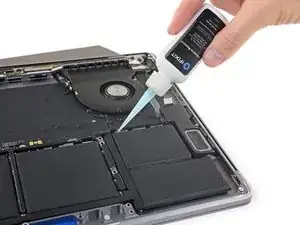
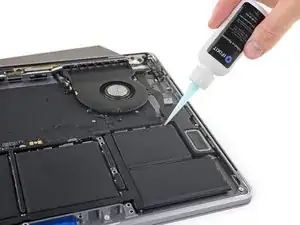
    • Aplica unas pocas gotas de removedor de adhesivo por debajo de las dos celdas de batería en la derecha, comenzando a lo largo del borde más cercano al ventilador.

    • No necesitas usar mucho. La pequeña botella contiene más del doble de la cantidad de solvente necesario para remover todas las celdas de batería.

    The bottle may (will!) squirt liquid. I used a bit of absorbant paper around the tip while turning the bottle upside down and putting the tip where it needs to go. Be especially careful not to drip liquid onto the speakers.

    For this type of work I always have a roll of thick toilet paper nearby: its leaves are smaller than those of kitchen paper.

    Robert Cailliau -

  57. UpGbyoAEBSoXxAGv
    UpGbyoAEBSoXxAGv
    QKj3VdVfrL3RrdJy
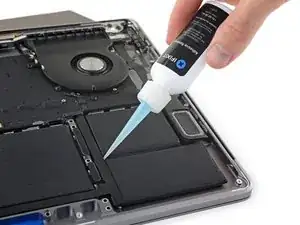
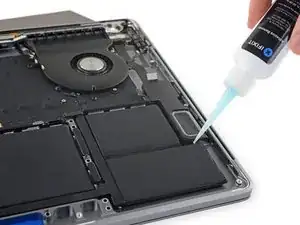
    • Agrega unas pocas gotas más del removedor de adhesivo entre las dos celdas de batería a la derecha, así fluye por debajo de la celda inferior de batería.

    • Espera alrededor de dos minutos para que el removedor líquido de adhesivo penetre y debilite el adhesivo de la batería antes de proceder con el siguiente paso.

  58. ATMsLlhhZ4BdeVER
    ATMsLlhhZ4BdeVER
    4FegSwkbcRZYmWQV
    1oPnvJlpxZfhoTmy
    • Después de un par de minutos, inserta una esquina de una tarjeta de plástico debajo de la batería, comenzando desde el borde inferior de la celda inferior que se encuentra más a la derecha.

    • Esto no debería requerir mucha fuerza. Si tienes problemas, aplica más removedor de adhesivo y dale 2-3 minutos adicionales para que penetre.

    • Trata de no deformar la batería. Una batería dañada o perforada puede derramar químicos peligrosos y/o prenderse fuego.

    • Mueve la tarjeta de lado a lado y deslízala por completo debajo de las dos celdas de la batería.

    • Levanta las celdas para separar completamente el adhesivo, pero no intentes quitarlas de su MacBook todavía.

    • Deja la tarjeta de plástico temporalmente debajo de las celdas para evitar que el adhesivo se vuelva a adherir a medida que procedas al siguiente paso.

    I had a great deal of difficulty loosening the batteries. The solvent seemed to have little effect on the adhesive strips. Despite efforts, I deformed the batteries trying to get them free.

    Kent Folsom -

    I also had a great deal of difficulty. I had to apply the adhesive remover 5 times before I could wiggle the card underneath the first battery sections. And it left the adhesive on the computer case; it did not remove the adhesive along with the battery sections.

    rileybk -

    Took me three applications of adhesive remover. Think it really is about wiggling though.

    Nathan Skene -

    It took me about 10 minutes or so to remove all battery modules. I used the adhesive remover as per the guide and also used the card with the corner doing most of the penetration instead of the blunt end. I also would gently wiggle the battery up and down while I applied more adhesive remover to allow it a better chance of getting underneath. BTW, my adhesive strips ran left to right and not back to front on the outer batteries, so I would think it would be more ideal to put the adhesive remover down the left and right sides of the outer batteries. The inner batteries (under trackpad) adhesive strips ran front to back. Keep this in mind when using the remover to loosen them up.

    Steven Wonder -

    Once one of the packs is loose, stick a leaf of toilet paper under it, so that it cannot stick to the body again, while you are working on the other packs.

    Robert Cailliau -

    One YouTuber uses a fairly short narrow and small thin-bladed and very essentially flexible cake spatula to push in under the battery lobes never sweeping sideways. No chemicals except for 99% propanol to remove the adhesive residue.

    hatuxka -

    See my comment in Step 63. Might save you time and trouble. Putty knife to remove batteries, then hot dryer to get black strips off followed by de-solv-it (or the Ifix-it remover) to get off the adhesive junk.

    Carl Schultz -

    I wanted to comment on what worked for me.

    I did put some of the remover on like they showed.

    I used the credit card plastic tool to kind of get underneath it.

    Then I used plastic putty knife and slowly and carefully pried the batteries off. I take no responsibility here for you, but it worked for me. Also I used 99% isopropoyl to clean the adhesive off.

    Also so you are probably reading this because it is hard, put the trackpad back like the other person said before you put the batteries in. I did that and it probably saved me time.

    Also as you reassemble, make you go look at every connector and there are a bunch and make sure those leads are all coming up through the logic board. I don't want to tell you I thought I was done 2x when I found a small cable at the end I missed. If you do end up in that case, you can remove some of the screws, and use the curved tweezers to kind of snake the cable up top. I know you aren't there yet, but as someone ahead of you, you'll remember this tip.

    Bryan Tanoue -

    The trick here was the use of a putty knife. As someone mentioned, the adhesive strips on mine also ran the direction of the width of the computer, not from the screen side down. Thus, putting the adhesive remover where the directions said only worked on the uppermost adhesive strip. The adhesive remover did nothing to help the process...

    Tim Lightfoot -

  59. ANpgWQLlMCZJdooY
    ANpgWQLlMCZJdooY
    RdWJHTyJxQIyNPDT
    Bo5c3ew5KFlTKsX6
    • Cambia al lado izquierdo del MacBook Pro y repita el paso anterior para separar dos celdas de batería más.

    • Deja la segunda tarjeta de plástico en su lugar temporalmente.

  60. 2loqum3ZIObJWPoI
    2loqum3ZIObJWPoI
    cOF3XMpsVdv5Z61P
    TCC4O2sSq2mMnBlw
    • Aplica unas gotas de removedor de adhesivo a lo largo de los bordes superiores de las dos celdas centrales de la batería.

    • Hay aberturas en el chasis debajo de estas dos celdas, que permiten que el removedor de adhesivo se filtre y puede evitar que penetre completamente.

    • Ten en cuenta que puede gotear y aplica más removedor de adhesivo en los bordes laterales si es necesario.

    Where are your gloves? :-)

    David Hampson -

  61. Is3uvfAOEapxintY
    Is3uvfAOEapxintY
    1bjyX4cBkMnYSJmC
    nHXJ1Z1bjJoaRnTR
    • Después de un par de minutos, remueve tu primera tarjeta de plástico e inserta una esquina debajo del borde superior de una de las celdas de la batería central.

    • Muévela de lado a lado y deslízala debajo de la celda de la batería hasta que todo el adhesivo se separe.

    • Si tienes problemas, no uses una fuerza excesiva y no deformes la batería. Aplica más removedor de adhesivo e intenta nuevamente o saltea dos pasos hacia abajo para un método alternativo.

    Once you get the card edge under a cell, you can apply a couple of drops on top of the card and it will flow down to the working edge of the card. This will make moving the card back and forth a lot easier.

    Scott Shore -

    I'd consider looking at step 62 first.

    Benny Baggott -

  62. GEIOa6DuMtOJMaqH
    GEIOa6DuMtOJMaqH
    mCqpI56Ouca1AamL
    VAdTwN1LwRblcGZm
    • Remueve tu segunda tarjeta de plástico y repite el paso previo para separar la celda de batería central restante.

  63. BfxXnAuAWofIXKiH
    • Si tuviste problemas para colocar la tarjeta debajo de cualquiera de las celdas de la batería, intenta colocando un trozo de hilo o alambre debajo de la celda de la batería y tira de lado a lado con un movimiento de corte para separar el adhesivo.

    • Usa guantes gruesos o envuelve el hilo alrededor de un par de manijas del conductor para no lastimarte los dedos.

    Wouldnt the wire damage the underside of the cells?

    Tom Jackson -

    Yes, but you should never re-use a glued-down battery after removing it like this. These batteries are not designed to be re-used, and can pose a fire risk even when removed carefully.

    Jeff Suovanen -

    I used dental floss + pastic card for the middle part. Avoided using the adhesive remover for the middle ones.

    Neil Robinson -

    I didn’t have to resort to this method, but if I did I would think some fishing line would be a good option. Put some candle wax on it if it starts to bind. I use this method to remove car dash phone holders that are siliconed down to the dash.

    Steven Wonder -

    I used this method, (while waiting for the iFixIt glue dissolver kit: was over a weekend; so too late). Works well with a strong, doubled (with slight, about 1 turn per cm, twist) 25SWG (0.5mm, 0.02inch) copper wire, wrapped around spare small screwdriver handles. Ensure that the angle of the wire is _very_ _flat_ while ‘sawing’ slowly; take your time, quite a lot of force is required to sheer through the spongy pads in places. I started with the 2 larger central cells to refine the technique.

    Shawn Marston -

  64. vlCsffdOoZSTCyJy
    vlCsffdOoZSTCyJy
    CLxYhfUgZDpSglEE
    • Levanta y retira la batería.

    • Antes de instalar una batería nueva, retira todo el adhesivo restante de la carcasa del MacBook Pro.

    • Retira las tiras grandes de adhesivo con unas pinzas o dedos enguantados.

    • Raspa los trozos restantes de adhesivo con una herramienta de plástico y limpia las áreas subyacentes con removedor de adhesivo o alcohol isopropílico. Limpie en una dirección (no hacia atrás y hacia adelante) hasta que el chasis esté limpio y listo para su nueva batería.

    • Esto puede requerir bastante trabajo, así que ten paciencia.

    Mine was very difficult to remove and clean. I spent forever trying to clean up the residue. However, I tried 70% isopropyl on two bays and the iFixit adhesive remover in the other two, and covered with food plastic wrap. Went to lunch and when I got back I used razor blade scraper (like used to remove stickers from glass), and it was pretty easily cleaned. Both chemicals worked just as well. Just soak and let the chemicals do the work.

    Philip Edelbrock -

    I didn’t use any solution to remove the battery and found that using the plastic tool to start an adhesive strip I was able to pull each one off by hand in one shot

    ajm0824 -

    I found the best way to do this was to put the hairdrier on the adhesive for a few seconds, then it just peeled off in one go. Wasted a lot of time trying to scratch them off before this.

    Nathan Skene -

    SECOND THIS ADVICE!! Use a hairdryer it will save you a lot of time and the old adhesive will come off much, much cleaner

    Judah Trimmer -

    Yes, hairdryer and use the plastic card to push/scrape one end so you can grab it with your fingers, then peel off the adhesive strip.

    Robert Such -

    It’s going to cost $25 to dispose of the battery some places.

    hatuxka -

    Used a putty knife and removed the batteries, then hair dryer and removed the remaining black strips. Used De-Solv-it (my usual computer anti-glue) to get the gooey glue off. Went well and clean. New batteries in and reassembled.

    Carl Schultz -

    By far the easiest way to remove the adhesive strips for me was to use tweezers. After removing the battery I had mostly large swaths of adhesive. first I used the tweezers, open, then laid it on an angle so the edge laid flat against the surface. Then scraped up side of the adhesive. I wedged up sufficient adhesive so that i could grab it angled (lengthwise not with the point) , Then i slowly pulled up the adhesive without a tear nearly every time, almost satisfying.

    Steven Sanborn -

  65. wfDnB1BoYR4GXaFw
    wfDnB1BoYR4GXaFw
    JgRKUHYSPtNgWdLd
    H2y2RgMyUmH1aSyF
    • Vuelve a verificar el encaje y la alineación de tu nueva batería antes de pegarla.

    • En los modelos anteriores, ten en cuenta el cable de datos de la batería y asegúrate de que no quede atrapado debajo de la placa de la batería.

    • Si tu batería viene con adhesivo preinstalado en la parte inferior, voltéalo y retira con cuidado el forro para exponer el adhesivo. Si tu batería no vino con adhesivo, aplica una cinta adhesiva delgada de doble cara como Tesa 61395 para mantener tu batería en su lugar.

    • Coloca cuidadosamente la batería y encájala en su lugar.

    • Mantén presionada cada celda firmemente durante 5-10 segundos para asegurarla en la caja inferior.

    In this photo, the holes that are shown in Step 51, where it states, “2018-2019 models: Use a P2 Pentalobe driver to remove both 3.2 mm screws,” are in a different position, so that re-securing the battery board doesn’t seem possible.

    Sarr Sheffer -

    Step 51 shows the correct procedure for two different models; this step shows only one model, because the procedure here works for both. Order the correct replacement battery for your model, and you’ll have no problem.

    Jeff Suovanen -

    I strongly recommend re-installing the touchpad BEFORE installing the battery. Doing that and feeding the ribbon cable through the correct slot will ensure that you don’t block the path of the cable. I did not do this and had to cut some of the framing plastic away to give me just a bit more slack to be able to reconnect the cable.

    After you have the touchpad back in, do a “dry” fit of the battery to make sure you see how the battery should go in so you don’t affect the ribbon cable. Then you can peel off the adhesive protection strips to secure the battery.

    Les Hartzman -

    After reading this comment I went straight back to steps 19/20 and reversed them before installing the battery… will update if something is notable!

    Nathan Skene -

    Be careful here. When I went to peel up the liner on one of the batteries the adhesive strip came up with it. It should be smooth under the liner. If you start seeing ragged adhesive, stop peeling, push it back down, and try another corner.

    J D -

    The version i got had the individual adhesives stuck to what look like tempered plastic that covered the whole battery. Removing the main plastic took off all adhesives at the same time. Its usefull to have another set of hands at this stage.

    Neil Robinson -

    I had the same problem as others with the adhesive sticking harder to the plastic cover than to the batteries themselves. Another set of hands here would indeed be useful. This was actually the hardest step of the entire process as you cannot reposition the batteries once you set them down. Luckily it seems there is at least a little wiggle room in there. Make sure the power connection lines up with its screw holes as the number one priority.

    james -

    I took off the top side full cover of plastic before sticking which meant all the individual cells were flopping about - leave it on until after sticking it down (as per the next step!).

    Jonathan B -

    Unsticking the packs is messy and dangerous since they may tear if too much force is applied, especially if swollen.

    But do they need to be glued in?

    The batteries should not move: in time that would damage the connections. Measuring carefully, the space between the unibody and its lower case is 8.2mm. The thinnest packs are 7.0mm: there is some room.

    Instead of taking the protective sheets off the glue patches, I put bits of double-sided tape on top. The batteries are now easier to remove, but they cannot slide around.

    However, after turning the machine upside up, they are in fact “hanging” from the “ceiling”! My office tape solution works, but the thinner packs might in time unstick and fall down.

    It may be advisable to use the strong glue anyway, or else put some thermally conductive silicone sponge between them and the lower case.

    The batteries are under the palms of your hands: they don’t get warm, leaving the protective sheets on should not have any effect. The unibody case there is 0.8mm thick.

    Robert Cailliau -

    Position the battery first with the back covers on it, to feel how it would fit in place (the battery logic board position is a good reference, and the relative distance to the two speakers). Only when you get a good feeling of the position, remove the adhesive covers and put it in place. SLOWLY, there are not many chances to pull it up again if you do it wrong!!

    Cristian Caprar -

    I pressed on the batteries for 5-10 seconds but they did not stay stuck after a few days.

    tomasponce -

  66. LSFuZL3LRVBUC6QU
    LSFuZL3LRVBUC6QU
    ZvkQ1OJktxWFfJuM
    • Luego de que tu batería esté posicionada e instalada, despega y descarta el revestimiento de plástico de la parte superior.

    • Asegúrate de que el revestimiento no retire accidentalmente ninguna de las cubiertas negras de los componentes de la batería. Si es necesario, usa pinzas para mantenerlas en su lugar mientras despega el revestimiento.

    • Calibra tu batería instalada. Cárgala hasta el 100% y luego sigue cargándola durante al menos 2 horas más. Luego, desenchúfala y úsala normalmente para drenar la batería. Cuando veas la advertencia de batería baja, guarda tu trabajo y mantén tu laptop encendida hasta que se duerma. Espera al menos 5 horas, luego cárgala de forma ininterrumpida hasta 100%.

    • Si notas alguna conducta o problema inusual luego de instalar tu batería nueva, podrías necesitar restablecer el SMC de tu MacBook Pro.

    In order to not remove everything, I reduce the procedure in following only steps 1 to 18 (until trackpad cable is pushed away).

    Then I removed the “low “ screws of step 46 in order to losen the fixation of “bottom” of the motherboard, as there is no room to remove the battery board and its ribbons).

    Then I removed the two screws of the step 50 (battery board). To take off the glued battery, I used twine or thread (e.g. as shown here: https://www.youtube.com/watch?v=fupkPz55...) but not acetone nor diluant.

    Then I lifted very carefully the bottom of the motherboard both to push away the battery board and its ribbons and to reinsert the new battery board and ribbons.

    Then I proceed backward to remount (step 50, step 46 then step 18 to 1).

    Note: my “old” battery was so inflated that the two screws of the lower case near the trackpad were difficult to remove (sometimes, this leads to a malfunctioning…

    Thank to Jeff for this overall procedure which helps me a lot.

    jompo -

    Did they change the step numbers? You mention step 46 and 50, but now it looks like these are steps 47 and 51.

    strells -

    Hi Strells, in the english or french version, it seems that it is always step 50 (two screws for battery) and 46 (“lower” screws for motherboard).

    jompo -

    As Jompo Discovered, I also concur: LB removal not necessary. “removed the “low “ screws of step 46 in order to losen the fixation of “bottom” of the motherboard, as there is no room to remove the battery board and its ribbons)”

    Be careful, I removed all screws from LB & disconnected speakers as well. .

    Macrepair SF -

    @jompo Can you share your revised steps? I have to do this battery change ASAP.

    roopesh -

    wow, this was awesome. thanks whoever wrote it. very well described.

    Astrit Mulla -

    I did the same a @jumbo . So, I’d be happy to rewrite this into a much shorter and less hazard format as @jumbo suggests which works perfectly and has many fewer steps and less risk of injury to the trackpad, motherboard and connected components. I did this in about an hour on my MacBook Pro late 2016.

    Marc Marchioli -

    Did you ever rewrite this @marcemarc ? I have to do this ASAP and would love to cut out as many steps as possible.

    roopesh -

    I didn’t rewrite it but basically stopped at step 19, and could get the batteries out without solvents or crazy efforts. Heat, slow working with a good spudger and they pop out.

    One thing really important was I found my battery data connector on the motherboard had a loose connection. I had tried three different batteries and it wat the data cable connect on the motherboard. So, that was touch to figure out but it did solve the problem. Bottom line, be careful when disconnecting or manipulating the battery data cable latch.

    Marc Marchioli -

    Plastic liner is not releasing from the battery cells. If I hold the foam pad in place the plastic sheet rips the foam.

    Lee Gwaltney -

    Newer batteries have foam protection that needs to be removed. The blue tape between the foam and the battery peels off from the battery. https://i.imgur.com/NDwhyVO.jpg

    hishamalbeik -

    Missing one critical helpful notation and photo on the reassembly part - a checklist of all the cables and connectors that need to be checked to make sure they are not caught under the motherboard. I missed the keyboard cable and it cost me half an hour. I checked off all the ones I could remember to make sure they were clear, but just missed that one. A photo with circles and a checklist would be a big help to make sure everything is clear. Otherwise, everything was very well done.

    J Wade Caldwell Jr -

    That’s in Step 49. Easy to miss, but it’s there! I feel your pain though, I’ve made that same mistake.

    Jeff Suovanen -

    I think that was the same cable I missed… at the bottom by the battery connector. I mentioned it to ifixit to add a checklist as well…. Who is responsible for editing this guide? Do you know?

    robert -

    That happened to me, as well. I agree that the list is implied in the instructions (working in reverse during re-assembly), but I also missed the two small cables on the upper left (headphone and touch-id cables). I had almost everything re-assembled by the time I realized my mistake and had to pull everything back apart again to fix the issue. I think that was just me being eager to finish, thinking the hard part was done. (But kudos to the authors for these instructions - my laptop battery is now working great, and everything is functional!!!)

    dot1000 -

    I did the same thing as @jompo did. Works perfectly fine. Thank you jompo, thanks to the author and thank you ifixit team.

    artoo -

    OK well, followed the instructions to the word, & pleased to say my problem has now been resolved. So very many thanks for the fix kit & cracking easy to follow instructions. The MacBookPro lives to fight another day.

    rayholliman -

    in knapp 3h habe ich den Akku gewechselt gehabt, passt auf die Unterlegscheiben vom Trackpad auf… die gehen schnell verloren und das Tastaturkabel vergisst man auch mal ganz schnell. Der Guide ist eine super Hilfe gewesen und ohne den hätte ich sicher das MBP noch nicht mal aufbekommen.

    swordper -

    Only 67,000 easy steps!

    Billy HW -

    that’s what I thought :D But as others mentioned it can be reduced to a nice amount of steps. but anyway: I think producers should make their products waaaay easier to restore those parts like accumulator, ram, HD or even processor cores.. long live the good old desktop pc with motherboards as big and heavy as macbook airs from nowadays ;)

    julia.kadauke -

    Great instructions I finally got my mac book back alive! I am noticing that the battery settings do not show that it is charging even though it is plugged in…tried resetting the SMC still nothing indicating it is charging…I have no idea if it is calibrating correctly. Has been plugged in for about 2 hours but only indicates a 30% charge

    Judah Trimmer -

    This guide worked very well for me. Triple-checked all the connectors when reassembling. I was able to get everything inside the machine cleaned up very well including the fans and the fan ports. Very well done!

    Randy Allen -

    Got through and it worked perfectly! Then I realized the up arrow key was no longer working :(

    Ended up sending it to Apple for a free keyboard replacement since it’s the notorious butterfly keyboard problem.

    Hopefully it will come back with the same battery and they won’t mind I replaced it.

    Bob Donovan -

    Very good guide, I didn’t remove the whole mother board tho (A1707) but this is not my first time replacing a battery of macbook.

    I used alcohol 96% to get the glue off the battery and a old card.

    The way to do it if you don’t want to take apart the whole laptop is to follow this guide to step 23 and unscrew the mother board screws then start to take out the battery and slide the cable while holding up the motherboard.

    Frederick aa -

    I FixIt 😎

    Ho acquistato il kit completo per il mio mbp 15" touchbar 2018.

    Ho seguito la guida fino al punto 18, poi il 46 Ed il 50.

    Non ho usato il solvente adesivo per staccare la vecchia batteria ma mi sono aiutato con la scheda in plastica e con un filo di rame sottile che facevo passare sotto le batterie, una alla volta. Mi sono anche aiutato con un phon per far ammorbidire il nastro adesivo originale sotto le batterie.

    L’unica accortezza sta nello stare attenti quando si toglie e poi si inserisce la scheda della batteria sotto la scheda madre. Io ci son riuscito senza problemi.

    Ora il mbp è in carica: sto seguendo i consigli di ifixit per la calibrazione della batteria.

    Comunque una guida perfetta, in ogni minimo dettaglio. Se avete pazienza, dimestichezza, seguitela ed avrete una batteria nuova in circa 1,5h di lavoro.

    Mimmo Villani -

    Uh oh I did this and now the machine won’t turn on. When I open the lid it shows the battery level for a second then it disappears. No amount of key presses seems to work. Any ideas here? I assume I messed up the keyboard or some other connection?

    Elijah Delventhal -

    Ah I fixed it. Double check step 31, that was my issue. The connector for the power button is right below another one.

    Elijah Delventhal -

    Same. Thanks .

    Pat Splat -

    For sure we need every step so its clear. One misstep and its game over. Shouldnt there be a note or step to work backwards after battery is installed?

    Steven Sanborn -

Conclusión

Para volver a ensamblar tu dispositivo, sigue los pasos de arriba en orden inverso.

Lleva tus desechos electrónicos a un centro de reciclaje certificado.

¿La reparación no salió como la planificaste? Consulta nuestra comunidad de respuestas para ayuda en la resolución de problemas.

Jeff Suovanen

Miembro Desde 06/08/13

407920 Reputación

7 comentarios

Hey, is it possible to replace battery without removing a logic board? It was possible on 2017 models.

avxkim -

@webcoder It’s similar to the 2017 design. I’m not sure how you’d replace the battery in either model without removing the board first, since the battery cables are routed underneath the board.

Jeff Suovanen -

Yes, it is doable if you are very careful. I’ve done it numerous times on 2017 -2019 MBP’s. See my comment one step 24. I own a one-man Mac repair business in SF. Anything to save time. This method has been tried and successfully completed at least 10 times.

Macrepair SF -

Where can I buy the battery? It is not available for iFixit?

Andres Torres -

Hello,

Is it the same procedure for a Macbook pro 13’’ Touch Bar 2019 ?

Thank you

PGCD -

Thanks for this great tutorial. I was thinking of following the steps up to 19 then 47 then 51, removing the battery with the motherboard by lifting it up a bit seemed risky to me. Finally I followed the procedure, except for the end where I took off the battery with the plastic cards, without solvent, just by heating it a little with a hair dryer. After installing the new battery, simply reset the SMC. As a novice, it took me 3 hours. Thank you so much !

Hamon -

Changement de batterie effectué. Merci pour ce super Tuto. Légèrement plus délicat que ce que je pensais et pourtant je suis super manuel. Attention à ne pas perdre les petites rondelles du trackpad, c'est le piège. J'en ai perdue une, je l'ai remonté sans, heureusement tout fonctionne parfaitement

Sabolovic Guitars -