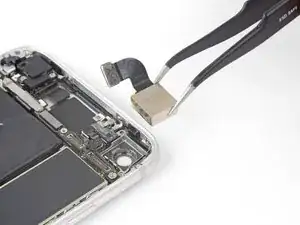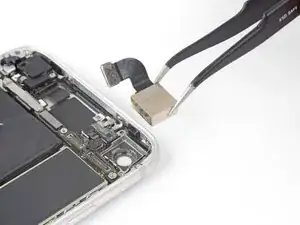
Introducción

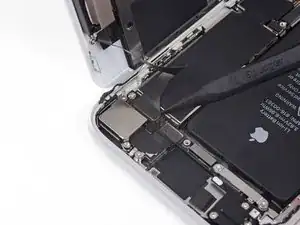
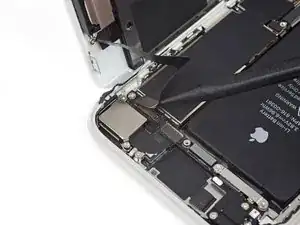
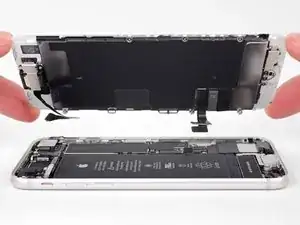
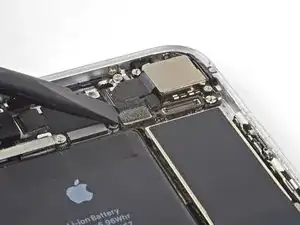
Sigue esta guía para remover y reemplazar la cámara trasera de tu iPhone 8.

  1. kH33mVcxVN2MyNsd
    • Antes de comenzar, descarga la batería de tu iPhone por debajo del 25%. Una batería de iones de litio cargada puede incendiarse y / o explotar si se perfora accidentalmente.

    • Apaga tu iPhone antes de comenzar el desmontaje.

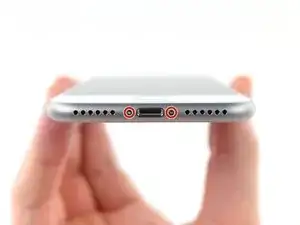
    • Retira los dos tornillos pentalobe de 3,5 mm en el borde inferior del iPhone.

    • La apertura de la pantalla del iPhone comprometerá sus sellos de impermeabilidad. Ten listos los sellos de repuesto antes de seguir adelante con este paso, o ten cuidado de evitar la exposición a líquidos si vuelve a ensamblar su iPhone sin reemplazar los sellos.

    just how long are those screws- i turn and turn and turn and the lift off is soooo slight, seemingly insignificant…

    An. Jahnke -

    I would recommend, from the very beginning, dumping all tools out of the kit (if you got it) and using that white paper tool box as a tray to organize the screws and braces in. It’s nice to work over because it catches screws well and makes it easy to see them if you drop any.

    Johnny Emrica -

    That’s a great idea thank you

    Mohamed Dekkiche -

    Screw to the left of the charging port will not come out. Screw on the right came out no problem. Any ideas?

    Bill Maher -

  2. HWFBtehBMjCQcFAc
    • Calentar el borde inferior del iPhone ayudará a suavizar el adhesivo que asegura la pantalla, facilitando la apertura.

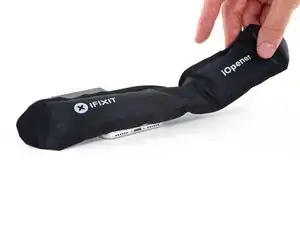
    • Usa un secador de pelo o prepara un iOpener y aplícalo en el borde inferior del teléfono durante aproximadamente 90 segundos para suavizar el adhesivo que se encuentra debajo.

    No hair dryer so GENTLY heated over stove burner

    John Toth -

    Hello,

    What temperature is suitable for removing the front display ? I bought i-Fixit ProTech which is not include the heating "roller" . Thanks for help

    Jiří Sítko -

    Ich habe eine heiße Wärmflasche verwendet. Das hat gut funktioniert :-)

    Moritz Hartges -

    I laid my phone face-down on my 3D printer’s heated bed, and set the temperature to 60 C. After a few minutes, it was ready to loosen.

    Nate B -

    If you don’t have an “iOpener” or heat gun, try using an electric heating pad. I have a small $11 pad I got at CVS for my knee. On medium heat it worked fine for removal and with the “pennies” for setting the new seal.

    Pete P -

    I used a heated tea kettle and a tea towel, it worked!

    Adam Yavner -

    I put on the furnace vent for 10 minutes to get it warm to the touch but not hot.

    terrelldoc -

    I attached it to the after burner of my rocket ship and that worked.

    Matt Brown -

    I'm holding mine just above an erupting volcano but I'm still waiting to see if it has worked. How long does it need?

    Paul Aron -

    I used a water-filled ziploc bag, heated it in microwave. fast, cheap, worked.

    John Barker -

  3. uSKuDUqkPXShJGIe
    uSKuDUqkPXShJGIe
    IeAAHaduoE44JpAR
    t5GbMXdtcHZSd6UW
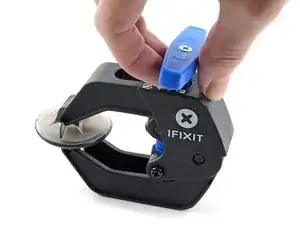
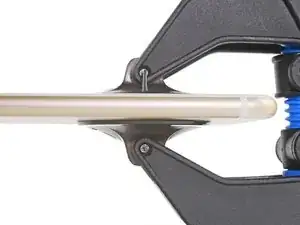
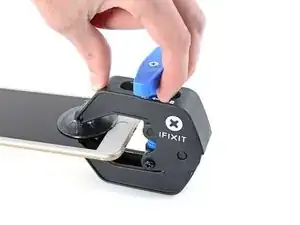
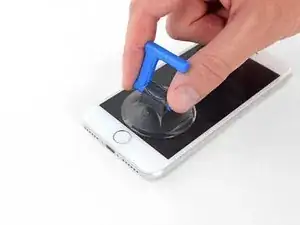
    • Los siguientes dos pasos demuestran el Anti-Clamp, una herramienta que diseñamos para facilitar el procedimiento de apertura. Si no estás utilizando Anti-Clamp, salta dos pasos hacia abajo para obtener un método alternativo.

    • Para obtener instrucciones completas sobre cómo usar Anti-Clamp, consulta esta guía.

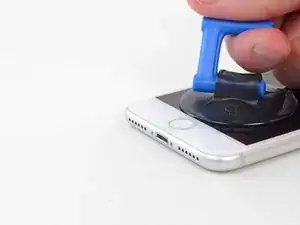
    • Tira de la manija azul hacia la bisagra para desactivar el modo de apertura.

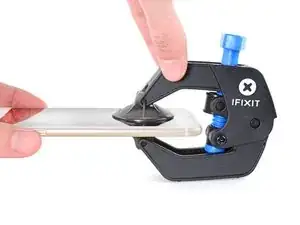
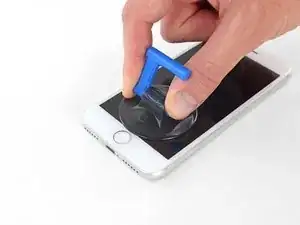
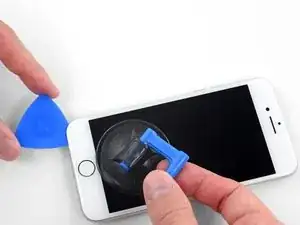
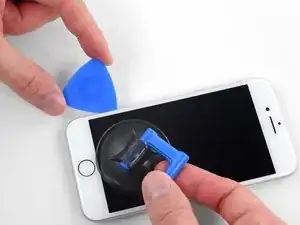
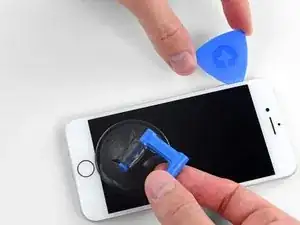
    • Coloca las ventosas cerca del borde inferior del iPhone, justo encima del botón de inicio, una en el frente y otra en la parte posterior.

    • Empuja hacia abajo las copas para aplicar succión en el área deseada.

    • Si encuentras que la superficie de tu dispositivo es demasiado resbaladiza para que el Anti-Clamp la sujete, puedes usar cinta de embalaje para crear una superficie más adherente.

  4. KDAeBh2lnZbXICfQ
    KDAeBh2lnZbXICfQ
    PeluubAbBVTKej6A
    JRgRfsPXUPFQfx1E
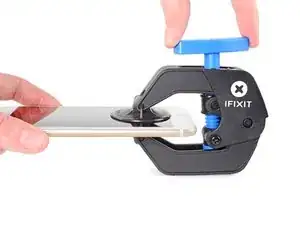
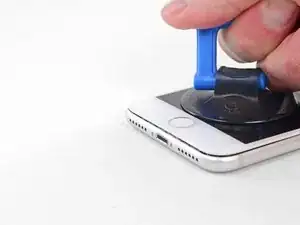
    • Empuja la manija azul lejos de la bisagra para activar el modo de apertura.

    • Gira el mango en el sentido de las agujas del reloj hasta que veas que las copas comienzan a estirarse.

    • Asegúrate de que las ventosas permanezcan alineadas entre sí. Si comienzan a salirse de la alineación, afloje ligeramente las ventosas y vuelve a alinear los brazos.

    • Espera un minuto para que el adhesivo se suelte y se abra la parte inferior de la pantalla.

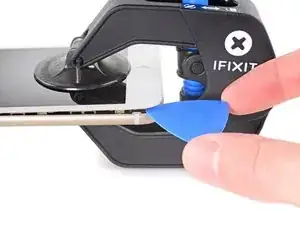
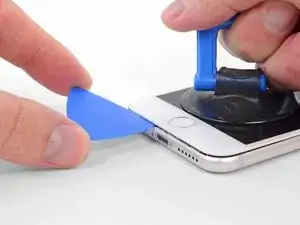
    • Inserta una púa de apertura debajo de la pantalla cuando Anti-Clamp cree un espacio lo suficientemente grande.

    • Si el Anti-Clamp no crea un espacio suficiente, aplica más calor al área y gira la manija en el sentido de las agujas del reloj media vuelta.

    • No des más de media vuelta a la vez y espera un minuto entre vueltas. Deja que el Anti-Clamp y el tiempo hagan el trabajo por ti.

    • Omite los siguientes dos pasos.

  5. VRy3fVrOovwUCabE
    VRy3fVrOovwUCabE
    A5IlSaM3n1xvayKW
    • Aplica una ventosa en la mitad inferior del panel frontal, justo encima del botón de inicio.

    • Asegúrate de que la ventosa no se superponga con el botón de inicio, ya que esto evitará que se forme un sello entre la ventosa y el cristal frontal.

    • Si tu pantalla está muy agrietada, cubrirla con una capa de cinta adhesiva transparente puede permitir que la ventosa se adhiera. Alternativamente, se puede usar una cinta muy fuerte en lugar de la ventosa. Si todo lo demás falla, puedes pegar la ventosa a la pantalla rota.

    Even with using high heat from a blow dryer, I had to put the suction cup over the home button or the bottom edge wouldn’t lift at all. That waterproof adhesive is incredibly strong.

    Aaron Soderholm -
    As others have said, this part really stinks, but it’ll work if you keep trying. Agree with multiple rounds of hair dryer on high (did about 60-90s each time), and with having to out the suction cup over the home button. You don’t need a big gap to pry it open - it’ll be slight …
    Johnny Emrica -
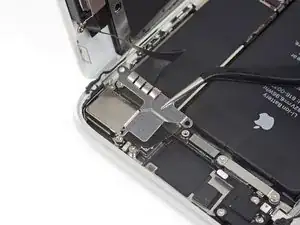
    Patience is the key here. Expletives and patience. Like previous comments say, putting the suction cup over the home button (I used packing tape to maintain the seal) will allow you to apply force to the proper location to separate the screen. Good luck!

    J Rawlinson -

    Get a suction cup pliers. It’ll make this part fun

    Bradley Steiner -

    iSclack EVO opened the iPhone easily even without heating with no fear of accidentally over-opening it like with a simple suction cup.

    Matti Haveri -

  6. PnYJMHrBqA2Jh22u
    PnYJMHrBqA2Jh22u
    5BxGfRPfmCqCLMOc
    xYlJ5IgLFMxCDZ2B
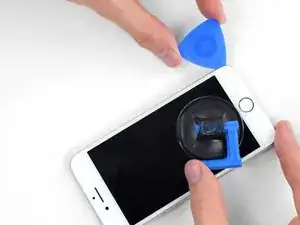
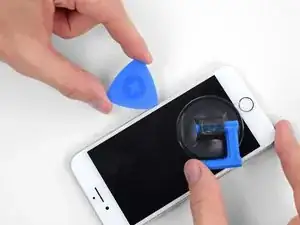
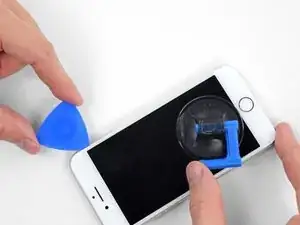
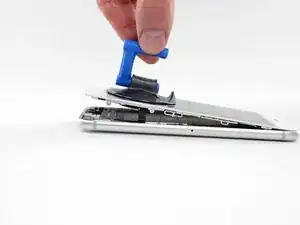
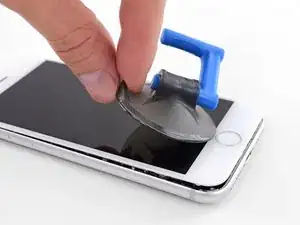
    • Tira hacia arriba de la ventosa con una presión firme y constante para crear un pequeño espacio entre el panel frontal y la caja trasera.

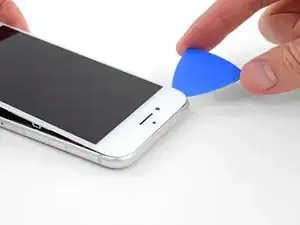
    • Inserta un púa de apertura en el espacio.

    • El adhesivo hermético que sostiene la pantalla en su lugar es muy fuerte; crear esta brecha inicial requiere una gran cantidad de fuerza. Si te resulta difícil abrir un espacio, aplica más calor y balancea suavemente la pantalla hacia arriba y hacia abajo para debilitar el adhesivo hasta que cree suficiente espacio para insertar la herramienta.

    The screen on my phone was so broken, a suction cup did not work, so I softened the adhesive with a blow dryer and used a Jimmy to carefully pry open the phone from the bottom just enough to slip a pick in.

    charguy -

    Just completed a smashed screen replacement, this is probably the most time consuming part. Used packing tape to cover the screen to help create a suction surface (had to replace it a couple times because it pulls away after a purple good pulls ) Used consistent heat for about 5 minutes, then stuck a pick in the tiniest opening… and pry pry pry!

    Brian Gill -

    I failed at this step. No amount of heating, pulling, and rocking opened up enough of a gap to slip in even a knife let alone the blue plastic tool. That's with a phone that has an undamaged screen - just trying to replace the battery. Apple won this round :(

    Michael Sherman -

    Be really careful here. I placed a sucker to the front and rear to help lever off the screen. However, the whole thing came away much easier than I anticipated and I ripped the front part completely away from the rear, tearing all three connector cables. New iPhone required.

    Chris Wood -

    Note that the opening pick they show here does not appear to come with the kit, which is a bummer! The plunger, the mini blue crowbar thing, these are too thick. I ended up using a really thin guitar pick.

    Johnny Emrica -

    Following careful methods can mostly preserve the seal and reusable. Won’t be as water tight but probably still pretty good.

    Bottom edge is pull up with suction + separating tool. Use small precision scissor to cut any tape that gets overly stretched upon initial opening.

    - For the 2 long edges, use an exacto knife to separate the seal from the screen. This keeps the tape on the chassis. Go slow along the long sides. Becareful to avoid scratching the paint on underside of the screen’s edge.

    - Top corners have a thick sealed tape. Best to just use separating tool to twist it open.

    In summary, top and bottom edge use separating tool. Side long edges can use exacto knife to gradually gently separate the seal from underside of the screen’s edge.

    Howard -

    4 picks and an exacto knife, plus 45 minutes later, I finally got it to open! Thanks tor the tip!

    Cat -

    Intact screen, check. Tool kit, check. Hair dryer hot enough to make the phone too hot to touch, check. Following all instructions, check. Screen still in place and refusing to come off, check.

    I heated, reheated, pulled and pulled. I simply could not get it off. Worked at it for an hour and a half, and I’m not a small guy. Yes it is hard to hold, but could get a grip. Just could not get it to budge. Off to the iPhone repair shop tomorrow. Anybody want to buy a repair kit and replacement battery?

    Jim Meyers -

    After struggling for 30m, I looked up some alternate methods and found this helpful:

    https://www.youtube.com/watch?v=25zAK5mG...

    - I used a utility knife and pried up right under the home button

    - the angle matters! I was trying to go too far down before going in. The top surface of the phone is rather thin, so you go in after barely getting under the chassis lip

    - tilt utility knife left to right once you’ve got it under to work it in

    - leave the utility knife in, and now add that pick

    Jared Wilk -

    Pro-tip: don't be an idiot like me. Instead, remove the screen protector you have on the phone before applying the suction cups. Derp.

    hunter.geofizz -

    I struggled with a hair dryer at first and a singular suction cup. However, I tried putting packing tape on the spot where I put the suction job (even though my screen isn't cracked) and I was able to do it first try with ease. Definitely recommend packing tape.

    Alessio Toniolo -

    Suction cup pliers. Dead easy

    Bradley Steiner -

  7. 2QPL6xQ1bKKTHEE2
    2QPL6xQ1bKKTHEE2
    Scr2EQgs2BWhSj3N
    KyO5DVLoiSXnDh2Z
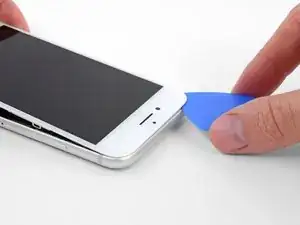
    • Desliza la púa de apertura hacia arriba por el borde izquierdo del teléfono comenzando en el borde inferior y moviéndose hacia los botones de control de volumen y el interruptor de silencio, rompiendo el adhesivo que mantiene la pantalla en su lugar.

    • Detente cerca de la esquina superior izquierda de la pantalla.

    • No intentes sacar el borde superior de la pantalla de la caja posterior, ya que se sujeta con clips de plástico que se pueden romper.

    My Plektrum worked ok, but the edges broke off a bit towards the end

    griffin.weber -

  8. bYHHQWBLX2SbZ4ZM
    bYHHQWBLX2SbZ4ZM
    oWPIhKQUMFLQKwJF
    VbhlSMqUKVaR3i4t
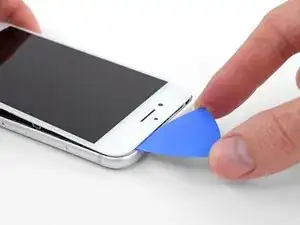
    • Vuelve a insertar tu herramienta en la esquina inferior derecha del iPhone, y deslízala alrededor de la esquina y hacia arriba del lado derecho del teléfono para separar el adhesivo.

    • No insertes la púa muy lejos, o puedes dañar los cables de la pantalla a lo largo de este lado del iPhone. Insértalo solo unos pocos milímetros, o aproximadamente el ancho del bisel de la pantalla.

    No pick in the kit you sent me.

    Ted Cooper -

  9. JsELGeLj2sULj4Rl
    JsELGeLj2sULj4Rl
    1Q5TB6TXChTQrCSO
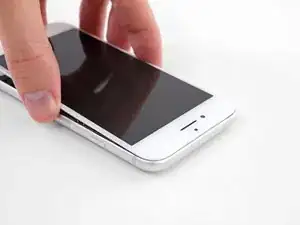
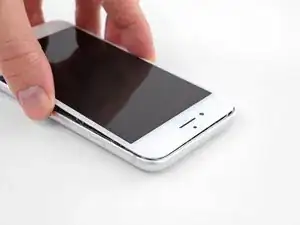
    • Levanta suavemente la ventosa para levantar el borde inferior de la pantalla.

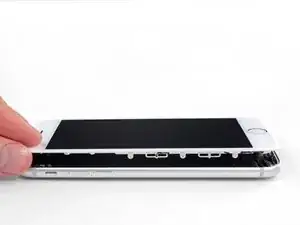
    • No levantes la pantalla más de 15º o corres el riesgo de forzar o romper los cables planos que conectan la pantalla.

    • Tira de la pequeña protuberancia en la ventosa para quitarlo del panel frontal.

  10. 1wx6fuMwGlVmTVwg
    1wx6fuMwGlVmTVwg
    L5DvjVj5xMJAlXg4
    y6nMrARZIGjH4KZO
    • Desliza una púa de apertura debajo de la pantalla alrededor de la esquina superior izquierda y a lo largo del borde superior del teléfono para aflojar el último adhesivo.

    I did end up using just a smidge of IFIXIT adhesive remover along the edge before opening and that seemed to really help

    Karen Flowers -

    I have been using the pointed tweezers to pull the adhesive strands apart and out as the display comes off.

    Adam Yavner -

  11. pmOBsioPu6PHdocL
    pmOBsioPu6PHdocL
    wCWsnncFGO1Jy1KT
    • Desliza el ensamblaje de la pantalla ligeramente hacia abajo (lejos del borde superior del teléfono) para desenganchar los clips que lo sujetan a la caja trasera.

  12. XaJPKiESSbHGIDqx
    XaJPKiESSbHGIDqx
    TKsLuMfvlLBnsdMa
    uyGD4MIvBrhLyuiO
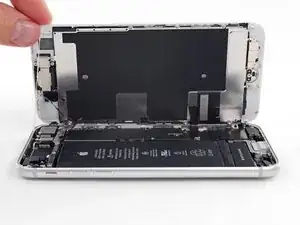
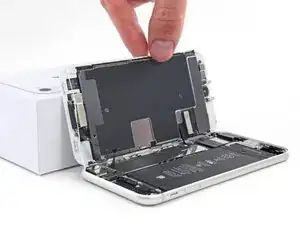
    • Abre el iPhone moviendo la pantalla hacia arriba desde el lado izquierdo, como la contratapa de un libro.

    • No intentes separar por completo la pantalla todavía, ya que varios cables planos frágiles aún la conectan a la placa lógica del iPhone.

    • Apoya la pantalla contra algo para mantenerlo apuntalado mientras está trabajando con el teléfono.

    Nach RECHTS klappen - nicht nach links!

    Manfred Wachtel -

    Als ich das Flachbandkabel auf der rechten Seite sah, hab ich mich auch gefragt, ob die das mit nach Links klappen ernst meinen, und das „Buch“ lieber auf japanische Art nach rechts aufgeklappt. Das sollte dringend in der Anleitung korrigiert werden!

    Sebastian Plickert -

    “Up from the left” means lift up the left side.

    Which is the same as folding to the right.

    “Like the back cover of a book” explains it even more clearly.

    Maybe it gets lost in translation?

    Nick Shtangey -

    Fold to THE RIGHT - not to the left!

    Jim Glenys -

    When I saw the ribbon cable on the right side, I also wondered if they were serious about folding it to the left, and the "book" would rather be opened to the right in the Japanese way.This should be corrected urgently in the manual!

    Jim Glenys -

    Hi Jim, the display opens from the left side, toward the right side. It should look like the back cover of a book. Hope this helps. Good luck with the repair!

    Adam O'Camb -

  13. X4JWAcg6GhHQOSP3
    X4JWAcg6GhHQOSP3
    CnISuIWAepn3nMmI
    • Remueve los cuatro tornillos Phillips que sujetan el soporte de cable de pantalla inferior a la placa lógica, de los siguientes largos:

    • Dos tornillos 1,3 mm

    • Dos tornillos 2,8 mm

    • Durante esta guía, controle sus tornillos para que cada uno vuelva de donde salió cuando vuelva a ensamblar. Instalar un tornillo en el lugar equivocado puede causar daño permanente.

    • Remueve el soporte.

    Not Y000 this time haha

    Easy Repair -

    can same length screws mixed up?

    Brook布魯克 -

    It is not ideal, but possible for these screws.

    Arthur Shi -

    using the repair kit i purchased with my screen replacement, i am currently having issues removing these screws with the PH000. please help

    Mark Ordaz -

    I was too, thankfully I had another set that contained the PH00 bit, that worked great for me.

    William Mitchell -

    Ok. My screw is stuck. How do I remove it? Philips head is stripped.

    Kristina Graham -

    Solved it myself. Firm pressure did the trick.

    Kristina Graham -

    Takes a little pressure with the Philips head

    John Toth -

    Upon this step, I noticed I had no bracket or screws. I had my screen replaced previously and I’m disappointed to find out the repairperson made no effort to replace these parts. I’ll start trusting myself more to do my own repairs.

    O D -

    took me awhile to figure out I needed to use PHOO bit for the 2 -1.3 screws

    Karen Flowers -

    It is important to keep careful track of the screws' position. Have a tidy workplace -- a few times when I tried to re-attach the very tiny screws with the tweezer, they slipped and flew away and I almost lost them.

    Matti Haveri -

    can you strip the screws / how can you tell if its strip or not

    antonio -

  14. vdubYBYlNkIsKuhK
    vdubYBYlNkIsKuhK
    asfJCUmeGVaHpBuD
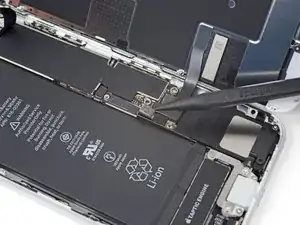
    • Utiliza la punta de un spudger para levantar el conector de la batería de su cuenca en la placa lógica.

    • Dobla el cable de conector de batería ligeramente fuera de la placa lógica para prevenir que haga contacto accidentalmente con la cuenca y proporcione potencia al teléfono durante tu reparación.

    Make sure you pry the battery connector off from the right hand side as shown in the picture. Theres a delicate component on the logicboard near the battery connector called a Mosfet which is linked to the battery charging software. If you knock it off accidently you’ll loose battery charging and the phone will boot loop and youll need to have it re-soldered back on.

    Gareth -

    I can confirm this as I learned my lesson by unknowingly prying the mosfet off. The phone will not charge now and is useless. I really wish they would add a note about this on Step 12 as a warning.

    Jeff -

    So this is it. You don’t have to go any further removing the screen. You can replace the battery right from this point.

    John M -

    I wish I saw this comment 2 hours ago

    Kenneth Moore -

    If I have to repeat this, I'd also consider removing replacing the battery at this point. The loose display must be then carefully fixed so the connectors don't break. And then it is not possible to re-attach the waterproof seal.

    The waterproof seal was included in the kit, but there were no instructions for it so I now skipped that. I later found YouTube video which seems to describe it (starting at 7:40):

    https://www.youtube.com/watch?v=RcgGRhaX...

    Matti Haveri -

    This is where I broke my phone, a phone that was working quite well, paid for in full. Just because I had a cracked screen. Be super careful when connecting the cables. I was in a hurry and not paying attention, used too much force when re-connecting and broke those teeny little pins that could not be repaired. A tech tried for an hour to no avail. cautionary tale. Good luck

    Karen Flowers -

    The display ribbon is a certain length and allows for some give, but behind it is hidden the Home button/TouchID ribbon, which sits against what amounts to a razor blade. This ribbon is much more taut than the display one, and therefore you have far less freedom of movement than you think you do. This is absolutely an intentional trap to discourage replacing your own battery. Quite frankly, it’s despicable.

    Anyway, so beware of that, because although I was very careful and did not even swing the screen very far (not more than 90°), the Home button ribbon tore and now needs to be serviced. Home button is disabled now.

    Apple should be ashamed of themselves for this. Please do look at the legislation effort that people are doing to try to get this kind of sabotage illegal, as well as all sorts of other gimmicks they pull. For a company that makes phenomenal products, they’re controlling like an abusive spouse.

    Dan Knight

    daniel -

    That happened to me and I could not figure out how it got broken. It's the home button and fingerprint reader.

    But I'm not bothering to get it fixed and I'm not replacing the entire screen. I went into system prefs/accessibility and activated the on-screen home button. Oh, well.

    robin -

    I cannot get the new battery reconnected to the connection port. Any tips/tricks? New and old battery connections appear similar. It wasn't difficult to disconnect to old battery.

    Robert Ast -

    Some reports here seem to indicate that the battery must be the very last connector to re-connect because otherwise there might be malfunction in some display components?

    It wasn't difficult to disconnect to old battery. But the most difficult part for me was to get the new battery reconnected to the connection port. I tried many times to carefully position and press it down with my fingertip or the flat end of the spudger but it did not hold its position. Maybe I pressed too weak because I was afraid breaking the connector and the mosfet above (?) it. But finally to my surprise it connected (at that point I temporarily booted the iPhone with the loose display to verify that the battery was connected). Whew, it succeeded!

    Matti Haveri -

    The connectors have very little "click" to them when they do seat properly, and are covered with soft foam. Very challenging to attach them by feel, and having the screen propped up, blocks light from exactly where you need it.

    Steve Trotman -

  15. TCwUjpw4oswOSAXN
    TCwUjpw4oswOSAXN
    Vjj4xROqJwdhjhrT
    • Utiliza el punto de un spudger para levantar el conector inferior de pantalla del su cuenca.

    • Para volver a sujetar conectores a presión como este, presiona sobre un lado hasta que haga clic, luego repite en el otro lado. No presiones en el medio. Si el conector está ligeramente desalineado, el conector puede doblarse y causar daño permanente.

    I broke the lower display connector. Is it possible to replace that part separately or do I need to buy a full screen replacement?

    Ross Mckellar -

  16. nuu4q5qZrNVlF1n2
    nuu4q5qZrNVlF1n2
    ZeGwj4XhWqCFSoRa
    • Utiliza la punta de un spudger para desconectar el segundo cable inferior de pantalla.

  17. hGBZSQdwlg53JjuO
    hGBZSQdwlg53JjuO
    EiOkLa1UAXIrQF1o
    • Remueve los tres tornillos Phillips de 1,3 mm que sujetan el soporte sobre el conector de ensamblaje del sensor del panel frontal.

    • Remueve el soporte.

    If you are replacing the adhesive liner, the remaining release liner strips will interfere with the two outer screws. I had to cut a working section out of the liner at each location and move it aside with the spudger.

    Thomas Tritt -

    This part is throwing me for a loop. Having difficulty finding the read head for these screws. Is it the same size as the two small 1.3mm screws in step 12?

    Jared Hensley -

    ended up getting it with the PH000, I must of just been rushing it.

    Jared Hensley -

    My bracket looks different and none of the screw heads I have fits.

    Ray Rushing -

    Mine too? Any help?

    George Waller -

    These screws did not stick to the magnetic screwdriver. Extremely difficult to get them back in place - but with some patience i succeeded :)

    Niklas Brammer -

  18. 1qYKeCSMYWRsFEnh
    1qYKeCSMYWRsFEnh
    tDDsCXEve1a6jSr3
    • Utiliza la punta de un spudger para desconectar el conector de ensamblaje del sensor de panel frontal.

    Do you have a link for the flex cord shown in the pictures so I can purchase it? Having a hard time locating that exact assembly

    Regal Carveiro -

  19. VcZIwswUILoZYWbE

    Hi ifixit, if you find my method dangerous, please remove it.

    After Step 17, I skipped Step 18 to Step 28.

    At Step 29, I lifted up the four adhesive black pull-tabs to expose the white adhesive side. Next, I use hot air gun and blow on the back cover of the iphone for about a minute (maybe a hairdryer will work too) .

    Warning: Don't overheat the iPhone, or you may accidentally ignite the battery.

    I think the temperature was around 60 DegC.

    Extreme Caution: Do Not overheat. I use my hand to gauge the hotness. Careful not to burn yourself or the board.

    I was able to pull out all the white adhesive tapes easily as the adhesive soften.

    DO NOT TRY this method if you are a novice or inexperience! I am not responsible if you hurt yourself or damage your iphone!

    John -

    Hey John! I’m glad the repair worked out for you!

    From our research, applying heat does soften the adhesive strips, but it also causes them to lose structural integrity and break more easily. That’s why we normally suggest using heat after the strips are already broken. Removing the Taptic Engine definitely takes a few extra steps, but we feel that it gives fixers the best chance of pulling out the adhesive strips intact.

    Arthur Shi -

    I agree with John, skip 18 through 27. These are to make it easier to remove the battery adhesive. I replaced the batteries on two IPhone 8s. The first one I did all that stuff and the adhesive still broken and I had to carefully pry the battery out anyway. When I reassembled the phone the Home button no longer worked. Looking it up, this is apparently fairly common due to all the fragile wires involved in these steps. The second I skipped these steps and when I reassembled it everything worked fine. Not one of the eight (both phones) adhesive strips came out properly. I fully drained the batteries before doing the repairs. By the way, I use the virtual home button on the one phone, it’s a little annoying, but the phone is still usable if you’re not ready to shell out for a new phone.

    Gary Berman -

    I also skipped removing the Taptic Engine. I could only half-way pull the lower battery tapes and completely the upper tapes after carefully prying them loose with the tweezer. I then used a hair-dryer for a minute to warm the battery and the other side of the phone (I used my other hand to make sure I did not apply too much heat. Make sure you do not blow the tiny loose screws away with the hair dryer!) and then slowly lifted the upper battery somewhat with the Opening pics tool, then re-heated the lower remaining tapes and quite easily lifted the battery out.

    I had bought two-sided tape to reconnect the battery but it had the tapes pre-installed (I wonder if it is necessary to tape the battery at all?).

    Matti Haveri -

    I also skipped these steps. I won’t say it was entirely successful - two of the four adhesive strips broke and could not be grabbed with tweezers. But I had gotten most of the adhesive out already and the battery was quite loose, so I used a warmer under the phone, then gently slid a flat plastic blade under one end of the battery and slowly worked it up the phone. (Dental floss would have been safer-don’t do what I did, kids!)

    Matt D -

    Likely can skip step 18-28 and all the risks. Battery tape is relatively removable by the following method

    - use a tweezer to pull up a corner of each tape. Then use fingers to peel back all the black tab on top of battery

    - use 2 hands. Index and thumb on both. Pull about 1/4” with one hand, hold the tension and pull 1/4” with the other hand. Alternate, go slow. Pull out all 4 tape completely. I think the pause after each 1/4” while holding the stretched tape firmly prevents the tape from over stretching to become too thin and break.

    - Don’t apply heat, I would guess that makes tape softer and break easier.

    Have tried other methods and failed in the past. Pulling too fast (tape will snap) or use a tweezer to twist/roll (sharp edges will cut tape) Anyway, just use index/thumb on both hands and alternately pull slowly

    I did do 2 iPhone 8 battery change this way. One removed all tape without breaking. Another broken all 4 tape after about 1/3 pulled so likely some factory assembly differeces.

    Howard -

    I second this, this method works well in most cases. Removing the haptics helps to keep the angle low and pulling the tape as straight as possible

    Hein Blöd -

    Howards method for removing the adhesive works like a charm. The only addition I made was to slightly warm the back of the iphone on a rice pack (used for sore neck muscles—haha). Going back and forth between hands is really crucial. While on hand gives a gentle pull, the other holds the phone from moving. Slow back and forth. Thanks.

    Lynn Thomas -

    Struggling with the glued down display, then properly cleaning all the remains of the old seal, then positioning the new seal is 95% of this job. I purchased my phone refurbished and it clearly had already been serviced once, there were remnants of an old seal below the current seal due to improper cleaning and prep that made getting the phone open harder than it needed to be.

    Steve Trotman -

  20. MiuUrLHfMLpAgFTe
    MiuUrLHfMLpAgFTe
    yyvgKeFeTGL4hiXI
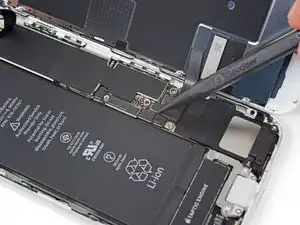
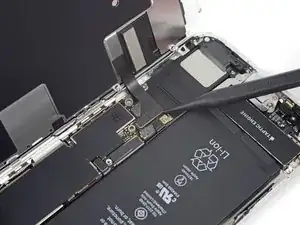
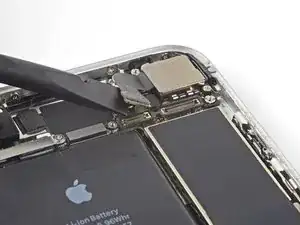
    • Usa el extremo plano de un spudger para hacer palanca y desconectar el conector de cable de cámara de su zócalo.

  21. CwZfx3wLfbqlrsAT
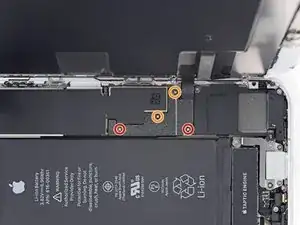
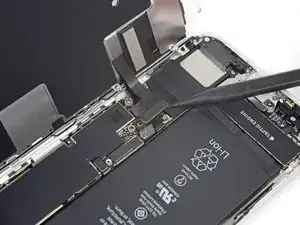
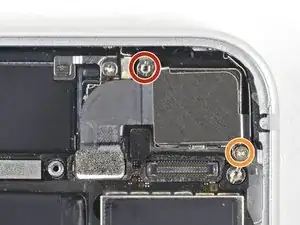
    • Desatornilla los dos tornillos que sujetan el soporte de la cámara trasera:

    • Un tornillo Phillips de 3.1 mm

    • Un tornillo separador de 3.0 mm

    • Los tornillos de separación se quitan mejor con un destornillador de separación o una broca.

    • Si no dispones de ellos, un destornillador plano pequeño te servirá—debes tener mucho cuidado y asegurarte de que no se resbala, pues dañaría los componentes que lo rodean.

    The screw descriptions are reversed, Red is the standoff, orange should be the 3.1mm Phillips; the orange circle is pointing to a standoff, but it’s not for the camera bracket, the empty hole above it should be circled in orange…red is wrong too.

    Maybe got mixed up because the bracket is already removed in this photo?

    NexGen Walpole -

    Hi NexGen,

    Thanks for catching that! We somehow updated this step incorrectly from a previously correct state. It’s fixed now.

    Arthur Shi -

  22. RJDqgVnNNswyDhOY
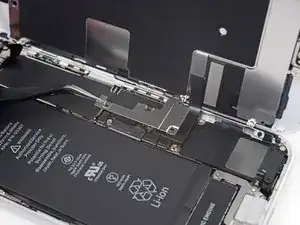
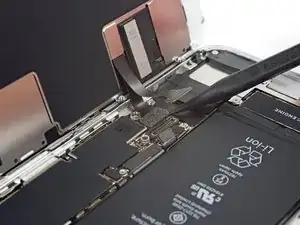
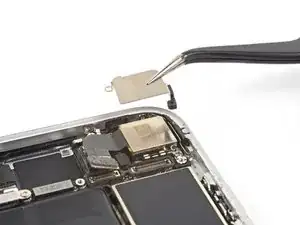
    • Remueve el soporte de la cámara trasera.

  23. vlEvMOYiPblVMtF3
    vlEvMOYiPblVMtF3
    CpOk1ScVM1Lg64eH
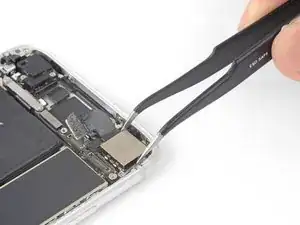
    • Remueve la cámara trasera levantándola de su recoveco.

    If you have trouble inserting the new camera module, try to connect the cable first and then put the module in, instead of first the module and then connecting. This was much easier for me.

    sebastian persch -

Conclusión

Para volver a ensamblar tu dispositivo, sigue los pasos mencionados arriba en orden inverso.

Lleva tus residuos electrónicos a un centro de reciclaje electrónico.

¿La reparación no salió como planeabas? Fíjate en nuestra comunidad de Respuestas para ayuda de resolución de problemas.

Arthur Shi

Miembro Desde 03/01/18

219093 Reputación

8 comentarios

Does the rear camera assembly include the camera glass?

Jacob Mattrella -

Hi Jacob,

The rear camera assembly is only the module itself. It does not include the glass mounted on the rear case.

Arthur Shi -

Is the iPhone still waterproof after the repair?

Thorn Deil -

Many people say that it’s not…

Even if you replace the adhesives securing the display.

The same goes with the rubber protecting the hole where the cable enter, or the rubbers or what ever that It’s protecting the buttons to keep the water away …

With time this protective things gets old and fail to do it’s job, it’s normal.

But I Guess that it’s better than not replacing the adhesives at all…

David Novo -

Does this camera module also works for the iPhone 7? Or should I only stick to the iPhone 7 one? That could be a nice upgrade if I already need to change it

Carlos gonzalez -

I have a spare iPhone 7, could I use the camera from my iPhone 7 in my iPhone 8??

Thanks

Chris

creed2oo2 -

Hi,

last week my back cover glass got shattered, since this time my main Camera won’t work.

i’ve tried the hard reset with the DFU Mode und checked already the contact of the camera.

Is it possible that the camera module is now broken too? I couldn’t find any damage at the camera…

Timxyz -

I may have done it wrongly and the camera 📸 isn't working.

what can I do?

Josh Odeh -