Introducción

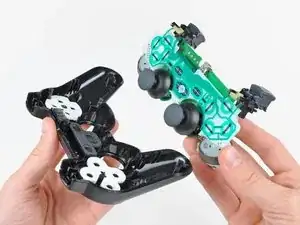
Usa esta guía para reemplazar las cubiertas de plástico de los botones y los contactos de goma de los botones en cualquier controlador DualShock 3.

  1. MnO4C2NgVBnH1meE
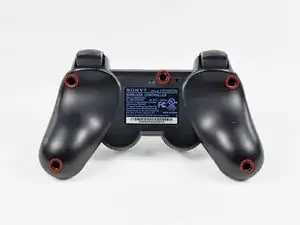
    • Remueve los cinco tornillos Phillips de 7.2 mm que aseguran la carcasa trasera a el control.

  2. lvGLlAtXpOWLih6R
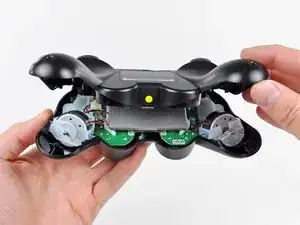
    • Presiona en la carcasa trasera entre los sticks analógicos y ligeramente levanta el borde inferior del resto del controlador.

    Es ist nicht ganz eindeutig das zwischen den beiden Analog-Sticks gedrückt werden muss. Der gelbe Punkt fällt kaum auf. Ein Bild mit Daumen an dieser Stelle wäre gut oder soooo…

    Tom -

    it’s not very clear but for this step you need to push where the yellow dot is shown on the picture. it’s rather tough. you kind of have to move the whole back plate a bit for it to work.

    Brandon der Blatter -

    I’m stuck at this step because I can’t for the life of me undo the clip

    IttyBittyGamerVR -

  3. pteSAIrvQBgU3cdM
    pteSAIrvQBgU3cdM
    BnFWDEdOvNaFHOJa
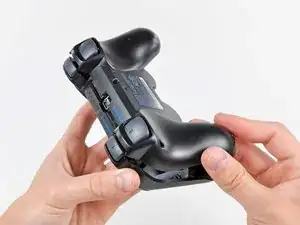
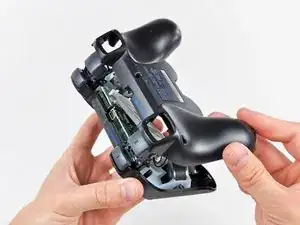
    • Empuja la carcasa trasera ligeramente hacia el borde superior del control para despejar el panel frontal de los 2 gatillos.

    • Jala la carcasa trasera del control, ten cuidado de que los 2 gatillos no salgan disparados.

    • Si accidentalmente los gatillos salen disparados, tenemos una guía de gatillos para que los vuelvas a colocar.

    the "trigger button guide" link links back to this page :o

    Alexander McMahon -

    I accidentally popped a trigger off, and both L1 and R1, because I skimmed and didn't read this step. Fortunately it's not hard. The tricky part with the triggers is that there's a little spring on them. You have to press the side of the spring that's pointing away from the trigger against the sloped surface of the controller (look at the other trigger for reference, if you only popped one off). Then you just slide the trigger on until the "handlebar" bits near the center click into place.

    briancaraher -

    The reset button – a small mostly-rectangular rubberized piece – fell out as I removed the rear cover. It covers the hole near the middle screw and has a post that presses SW1 on the motherboard.

    Fletcher Stern -

  4. 2HhHt5LZqZkd2X2w
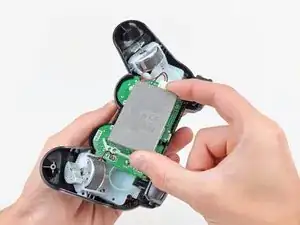
    • Levanta la batería de la tarjeta madre para tener suficiente acceso al conector de la batería.

  5. DVcF4eWKVTS1fJ2A
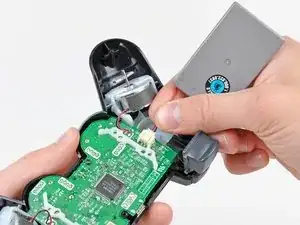
    • Con cuidado jala el conector de la batería de su socket en la tarjeta madre.

    • Puede ayudar si usas un par de pinzas o alicate para tomar el conector de la batería cuando lo desconectes por la primera vez. Solo jala del conector. No intentes removerlo jalándolo de los cables negro y rojo.

    be careful with the connector, it was hard at the first time to take it away, i was close to break the wire

    Mugen -

    Where can I purchase an Input Board?

    Cody -

    To safely remove the connector, you can slide a thin screwdriver inside two slots that can be found on top of the connctor housing (the beige colored one), which allow you to push on the connector. Do this slowly, prying first through one slot, then through the other, until the connector is out. This will allow you to remove the connector without pulling by accident on the wires.

    Adriana Fulgenzi -

    Thanks Adriana. Good advice. My local battery replacement guy will not touch PS3 controllers.

    Arie van der Winden -

    Hi Adriana,

    I have to say, that tip really saved me. I was pulling on the wires (this is my first time doing this) and wasgoing nowhere.

    Thank you!

    Michael Vichiola -

    I highly, HIGHLY recommend that if anyone bought the protect toolkit, that they use the SIM bit as that is extremely helpful for this step!

    Michael Vichiola -

    Take note: The PS3 remote controller in this guide has some white plastic spacers shaped like ( and ) on the board which keep the battery from touching the chip. The PS3 remote controller I disassembled has no spacers on the board but rather the board has 6 holes - 4 small square corner alignment holes and two rectangular retaining holes. The battery was an LIP1472 but the battery pack casing had 4 alignment pins and 2 retaining tabs to fit into the board and hold the battery away from the chip. Why does it matter? It may or may not matter, however the fact that all designs include separation indicates that it might matter. Possible reasons are that the battery might touch the chip and cause electrostatic damage, the battery might touch the chip and not allow the chip to dissipate heat properly, or the battery might simply rattle a bit. I can not find any replacement batteries with pins and tabs. It may be necessary to create some standoffs from plastic similar to those shown above and attach to board.

    Warp9pnt9 -

    My controllers new battery (ordered from ifixit) doesn’t have connectors on it like my dead battery. Help?

    Michael Vichiola -

    Its literally completely flat (the battery)

    Michael Vichiola -

    What's the battery's voltage?

    Keith Wucherer -

    The battery is 3.7 voltage 610 mAH from Sony's LIP1359 battery. Max charging is 4.2 V and 0.4A, but I found a better one from Digikey. It is still required to modify the battery's connector.

    My new battery for the PS3 controller.

    https://www.digikey.com/en/products/deta...

    Michael Marr -

  6. gjtH3SXCHrOQoSPu
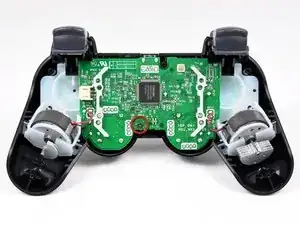
    • Remueve el único tornillo Phillips de 7.2 mm que asegura la tarjeta madre a la cubierta frontal.

    Most of the times, the only thing you need to repair to fix random key-presses is the soft plastic under the input-board connector to the motherboard.

    At step 6 just move the motherboard upwards and you'll be able to see the connector.

    Take the black soft-plastic-thing under it, and make it thicker with some tape. ( roll some tape around it 3-4 times - cut the tape properly so it can fit afterwards )

    Now put everything back.

    Random Presses are gone. Both of my controllers had this problem after a few hot summers and many hours of gameplay... both are fixed now.

    Nick Preveza -

  7. TJmxpXaZyTRtSVUm
    TJmxpXaZyTRtSVUm
    6FBNTTHyZPDsN4tU
    WAAQI4et6A5AkHPM
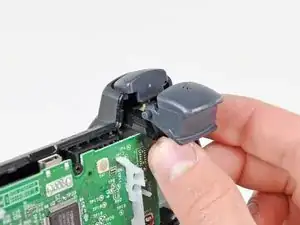
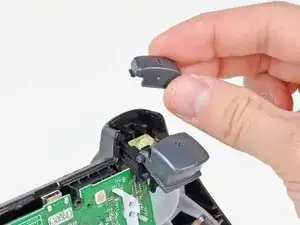
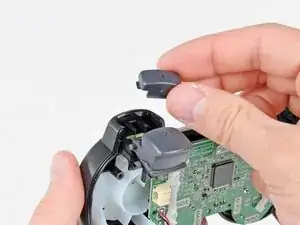
    • Desliza los retenedores de los gatillos ligeramente de la carcasa frontal.

    • Remueve el botón #1 en cada lado.

  8. uumFgW1CLNTpmwKO
    uumFgW1CLNTpmwKO
    gHpaFEWxULjZ6ebH
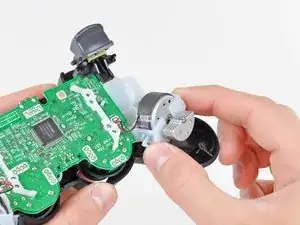
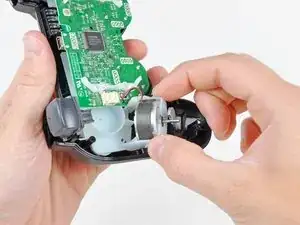
    • Jala los retenedores del motor vibratorio de la carcasa frontal para remover el conjunto de tarjeta madre.

    It should be noted that my controller (Australian) has the motors mounted directly the the housing. Once the two retaining screws were removed each motor was connected to the motherboard assembly by the wires alone.

    Arthur N -

    Yes, my NA controllers were like this as well.

    geoff -

    My ~2012 EU controller (CECHZC2E) differs from this point as well. The entire white assembly comes out of the black shell by pressing in the latches on both sides of the vibration motors (you can see a small bit of white plastic stick out from under the black shell, that is where you press down).

    Martijn Storck -

  9. QyQpSxhxpYCy5FPE
    • Remueve el conjunto de tarjeta madre de la carcasa frontal.

    • Cuando remuevas el conjunto de la tarjeta madre, trata de no voltear la carcasa frontal hacia abajo ya que los botones y sus cubiertas pueden caer.

    On my controller the button contact filament stayed inside the controller housing. Concerningly this exposed the contact ribbon for the buttons and sticks against the back of the logic board. However, the rest of the service with without issue, and the controller worked fine. This controller had a gray battery inside of it, and was likely a 60GB launch controller.

    geoff -

  10. 6IKeCIbrpwrVqm6q
    6IKeCIbrpwrVqm6q
    URvidLTvWbaaXryH
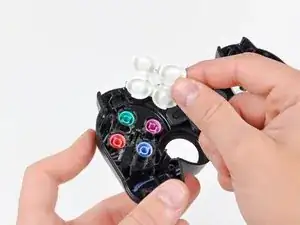
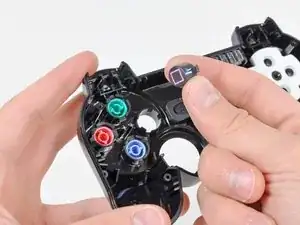
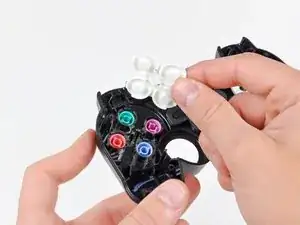
    • Levanta los contactos de goma de los botones de la cubierta frontal del controlador para acceder a las cubiertas de plástico de los botones.

    • Levanta las cubiertas plásticas de los botones dañadas para sacarlas de la cubierta del controlador.

    Does this include the start, select, and home button covers as well?

    Dalton Vander Weide -

  11. 1milL2Quy16FsOHw
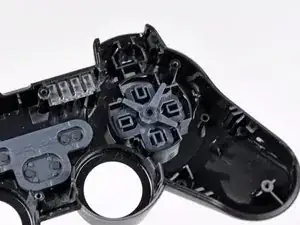
    • El D-pad tiene una pieza de plástico de tres brazos que debe instalarse como se muestra antes de instalar el botón de goma para que funcione correctamente.

Conclusión

Para reensamblar tu dispositivo, sigue estas instrucciones en orden inverso.

Andrew Bookholt

578639 Reputación

6 comentarios

My Dualshock 3 didn't have the three armed plastic piece on the D-pad. Mine's a red one, relatively recent. My controller also had the problem where it would randomly send button press events when using the L-stick. I traced the problem to the ribbon connector between the board and the contacts, which was very dirty. I cleaned the contacts and put the controller back together with an additional rubber shim between the back cover and the battery, which got rid of the creakiness of the somewhat loose-fitting case. Works great now.

Kevin -

How do you clean the contacts? Is there a special way?

yeshuabendavid -

Thanks. ^^ Tightened screws after opening it and this kind of problem got solved.

Janne K -

Are these instructions the same for the dual-shock 2?

Larry Howard -

TNX-could not really figure out where the 3-armed plastic should fit in but tnx to step 11 i know-now im going to dismantle my controller again.

Kristian Brandström -

Can someone help me? I opened my Dualshock 3 and tried to exchange batteries with another one, but when I reassembled it, none of the buttons work.

g.v3ronez -