Introducción
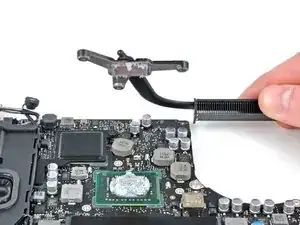
¿Es el montón de pasta térmica OEM lo que hace que tu MacBook Pro sea más lenta cuando se calienta? Usa esta guía para remover tu disipador de calor y aplicar pasta térmica nueva.


-
-
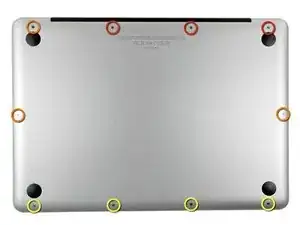
Extrae los siguientes diez tornillos:
-
Tres tornillos Phillips #00 de 14.4 mm
-
Tres tornillos Phillips #00 de 3.5 mm
-
Cuatro tornillos de resalto Phillips #00 de 3.5 mm
-
-
-
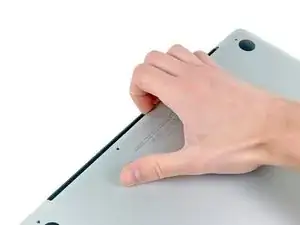
Usa tus dedos a modo de palanca para levantar la tapa inferior del cuerpo del MacBook por la zona del ventilador.
-
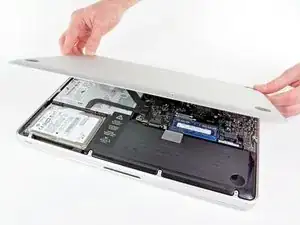
Extrae la tapa inferior.
-
-
-
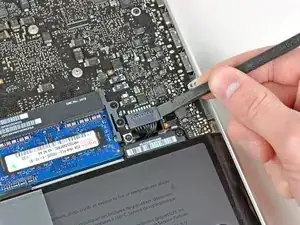
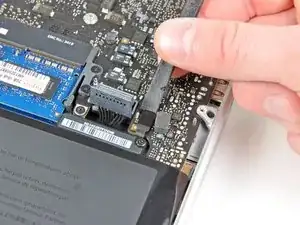
Usa el borde de un spudger para levantar el conector de la batería haciendo palanca para extraer su toma de corriente de la placa madre.
-
-
-
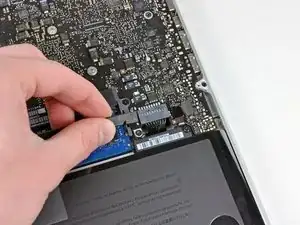
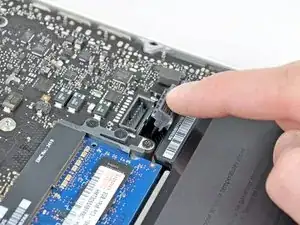
Dobla el cabre de la batería ligeramente para alejarlo de su conexión en la placa madre para evitar que se conecte accidentalmente mientras trabajas.
-
-
-
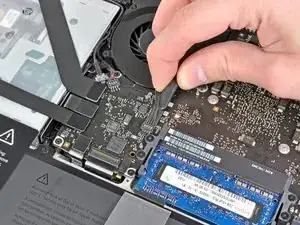
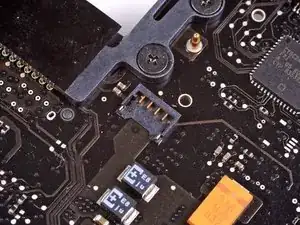
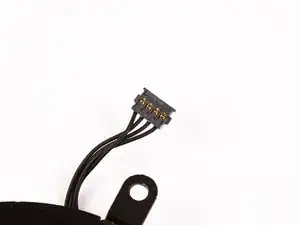
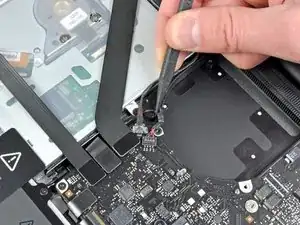
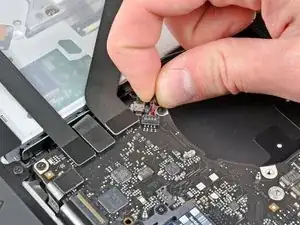
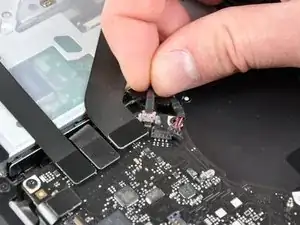
Utilice el borde de un spudger para hacer palanca suavemente hacia arriba y hacia afuera del conector del ventilador en la placa lógica.
-
Tenga cuidado de no romper el enchufe de plástico del ventilador de la placa lógica mientras utiliza su spudger para levantar el conector del ventilador hacia arriba y fuera de su enchufe. El diseño de la placa lógica que se muestra en la segunda imagen puede ser ligeramente diferente al de su máquina, pero el enchufe del ventilador es el mismo.
-
-
-
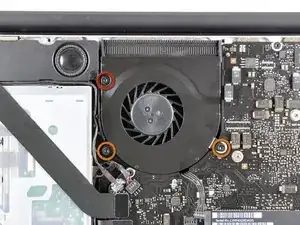
Retira los siguientes tres tornillos que sujetan el ventilador a la placa lógica:
-
Un tornillo Torx T6 de 7,2 mm
-
Dos tornillos Torx T6 de 5,3 mm
-
-
-
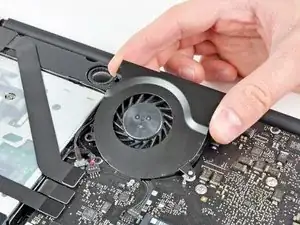
Levante el ventilador de su lugar en la placa lógica, teniendo cuidado con el cable que podría quedar atrapado.
-
-
-
Utiliza la punta de un spudger para sacar el cable del altavoz/subwoofer derecho por debajo del dedo de retención moldeado en la caja superior.
-
Jala el cable del altavoz/subwoofer derecho hacia arriba para sacar el conector de su enchufe en la placa lógica.
-
-
-
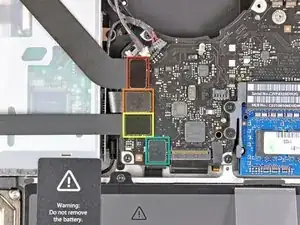
Desconectar los cuatro siguientes cables:
-
Cable del AirPort/Bluetooth
-
Cable de la Unidad Optica
-
Cable del Disco Duro
-
Cable del Trackpad
-
-
-
Usa la uña para voltear la solapa de retención en el zócalo ZIF del cable plano del teclado.
-
Utiliza la punta de un spudger para sacar el cable plano del teclado su zócalo.
-
-
-
Si se encuentra presente, retira la tira pequeña de la cinta negra que cubre el zócalo del cable de retroiluminación del teclado.
-
-
-
Usa la punta de un spudger o de tu uña para voltear la solapa de retención en el zócalo del cable plano de contraluz del teclado ZIF.
-
Extrae el cable de la cinta de contraluz del teclado de su receptáculo.
-
-
-
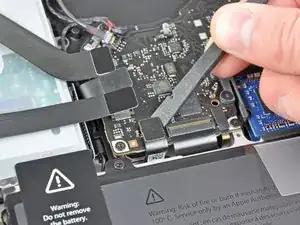
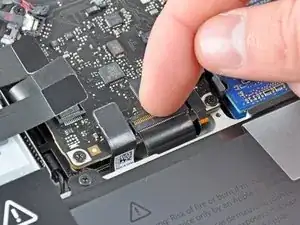
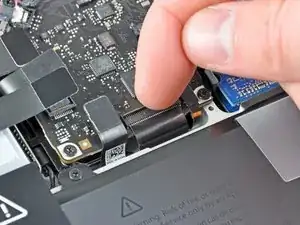
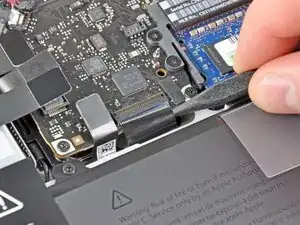
Usa el extremo plano de un spudger para apalancar el conector del sensor de sueño/batería hacia arriba desde su zócalo en la placa lógica.
-
-
-
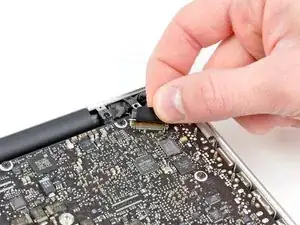
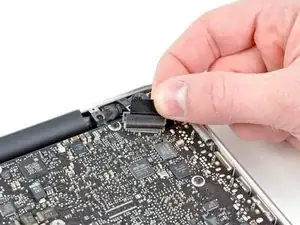
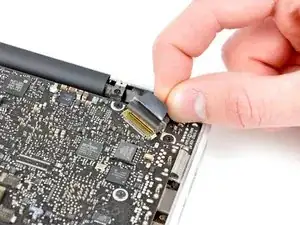
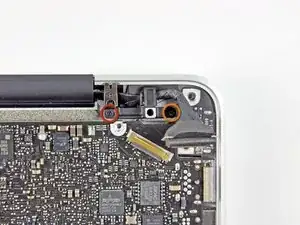
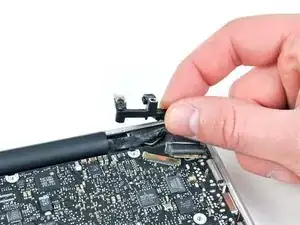
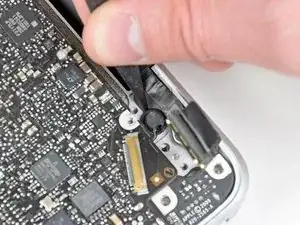
Sujeta la lengüeta de plástico que esta sujeta al bloqueo del cable de datos de la pantalla y gírala hacia el lado de entrada de DC del equipo.
-
Tira del cable de dato de la pantalla para sacarlo de su zócalo en la placa lógica.
-
-
-
Retira los siguientes tornillos:
-
Cinco tornillos T6 Torx de 3.6 mm.
-
Dos tornillos T6 Torx 4.3 mm.
-
Dos tornillos T6 Torx de 7.2 mm.
-
Cinco tornillos T6 de 3.0 mm
-
Dos tornillos T6 de 3.6 mm
-
Dos tornillos T6 de 6.7 mm
-
-
-
Retira los dos siguientes tornillos:
-
Un tornillo Phillips de 8.6 mm
-
Un tornillo Phillips de 5.5 mm
-
Retira el retenedor del cable de datos de la pantalla de la caja superior.
-
-
-
Usa la punta de un spudger para quitar suavemente el micrófono del adhesivo que lo sujeta a la carcasa superior.
-
-
-
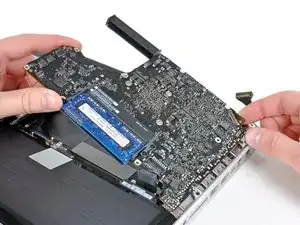
Acopla los muchos conectores cerca de sus bordes, levanta la placa lógica del extremo más cercano a la unidad óptica.
-
Sin doblar la placa, maniobra para sacarla de la caja superior, teniendo en cuenta la conexión flexible a la placa de entrada de DC que puede quedar atrapada en la caja superior.
-
Retire la placa lógica.
-
-
-
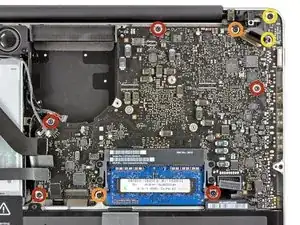
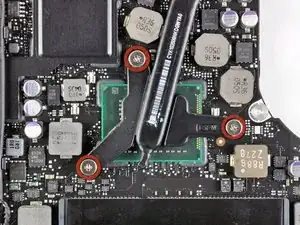
Retira los tres tornillos Phillips #1 de 8. 4 mm que sujetan el disipador de calor a la placa lógica.
-
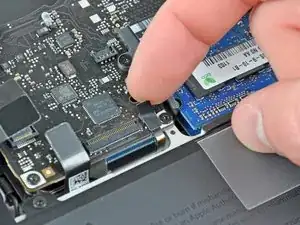
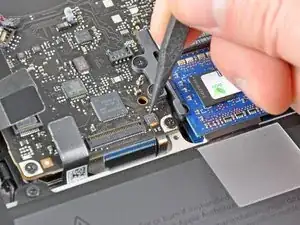
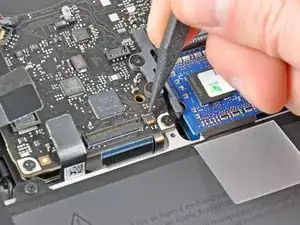
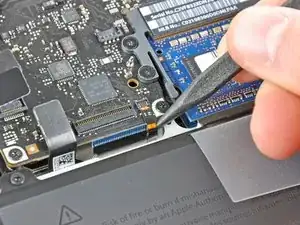
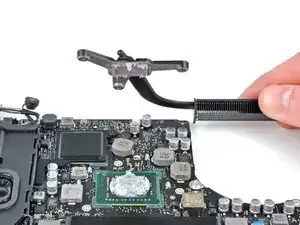
Para volver a ensamblar tu dispositivo, sigue estas instrucciones en orden inverso.

17 comentarios
Awesome guide, I was able to complete the whole job (very slowly and carefully) in an hour start to finish. I am not an expert, I am just your average, everyday DIYer. I'm actually a medical student with an interest in engineering and "tinkering" looking to save money however I can. I would HIGHLY recommend this to every one of my friends (and I may even do this for some people). My keyboard doesn't get warm anymore, and my fan stays quieter doing more things. I'm now running 40-45 degree temps instead of 70-85 temps. Incredible. Like others on the internet, my computer had a TON of paste on it that was all over the CPU. I feel better now that I know how my computer was put together (by me). Good luck!
I also reapplied thermal paste under the heatsink on my early 2011 Macbook Pro. Temps are on average much lower, now my cpu almost never spikes above 70 C. I used the mac application Hardware Monitor to check temps in real time before and after. Previously doing pretty much anything on my MBP would cause the fan to spin at its max rpm and the computer was almost always hot to the touch. Now it's silent (also swapped the hdd for an ssd) and the fans almost never turn on at all!
I followed the guide after my MBP began showing extreme CPU temps like 95-98 C.
I removed all the dry paste that was left on top of the CPU, and replaced it with a brand new paste.
But it didn't work. I'm still getting these high temps. I reopened my computer and placed even more paste. But it's not cutting it.
I'll try a new cooler. Maybe that helps... though. I'll comment here if it does.
Rodrigo -
Less is better, you want a very thin (think see through silk thin) coating between the CPU and the Cooler otherwise it acts as an insulator and causes more heat not less. just enough to make sure that no air is between the two.
Awesome guide Ifix it rules! Loved the step by step format. Im not a big fan of videos. The zoomed pictures saved my life as reference. Perfect!
How much weight can I save by removing the optical drive?
gunes314 -
You can save a lot of weight if lets say your installing a solid state drive or putting in a second hard drive but if you know that you use the CD/DVD disc drive a lot then you might just want to leave the drive alone.
Marshall WahlstromHelgren -
Tip: Use one of those weekday pill holders to have a cheep way to store screws you remove and each day of the week can be for different sizes or parts. It has been handy to have (much less expensive than the magnetic mat.
Robert Wacker -
Hello, where can I buy the screws I need in case I lose one of them?
taylornya -
iFixit sells a kit: MacBook Pro Unibody Lower Case Screw Set
Darrell Johnson -
I have one stripped screw... How opening without drill it?! Any suggestions please?
rodrigosady -
I also stripped a couple screws. I wasn’t able to open it up without drilling. After drilling the heads and removing the cover it was easy to hacksaw the tip and unscrew with a standard driver.
Michael Wilkens -
We have a guide for that!
Cómo quitar un tornillo barrido
Sam Omiotek -
My top tip - make sure you buy good quality Phillips screwdrivers and a magnetic holder. Cheap screwdrivers won’t get the screws undone safely. Without a magnetic holder you have no chance of getting the tiny crews in and out safely.
jeremyyoung -
A good Phillips 00 is your friend here. Also, when reinserting the screws, gently start anticlockwise and you wil feel a click at the start of the thread. This tells you you’re in the right place and less likely to cross-thread through force in the wrong place.
Iain Boyd -
I feel like these are 000 screws. Amazon sales describe them as such and my 000 screwdriver fits better
cam2000deluxe -
Before ordering a new Trackpad remove the existing battery and try clicking the Trackpad. If it clicks OK with the battery out the source of problem is likely a swollen battery, which should to be replaced even if it still works to some degree. From the side of the battery you will likely see the soft part of the battery bulging beyond the hard case.
Patrick Langvardt -
That’s absolutely correct as I can testify. With the battery removed I also adjusted the T6 set screw that adjusts the sensitivity of the trackpad click, evidently someone had cranked mine down tighter than the factory setting.
Gary Register -
Le quatrième paragraphe dans les instructions en français n’est pas correct : ce ne sont pas les 2 petites vis, mais les 7 petites vis qui sont inclinées. Et les 3 grandes sont bien verticales.
Degeorges -
Bonjour ! Merci de votre observation. J’ai corrigé la traduction. iFixit étant un wiki, n’hésitez pas à modifiez si vous remarquez une erreur :) Encore merci de votre attention et à bientôt !
Claire Miesch -
Tip: if you have a magnetic screw mat or similar, lay the macbook over the mat to make sure it catches any screws that may decide to fall of and hide under your table
Moritz -
Funny, it's not her hands that are doing the close ups. :)
Cinemated Man -
What's the difference between the shouldered and non shouldered screws? They look exactly the same to me.
MLNLRD -