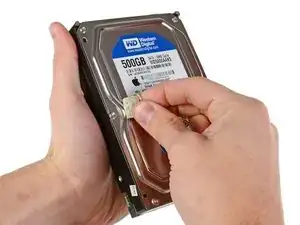
Introducción
Utiliza esta guía para reemplazar o actualizar tu disco duro.
Esta guía también incluye pasos para actualizar el disco duro de tu iMac con un SSD. Describe cómo instalar el sensor de temperatura de la SSD para que los ventiladores de la Mac funcionen a la velocidad correcta.
Antes de comenzar cualquier trabajo en tu iMac: Desconecta la computadora y mantén presionado el botón de encendido durante diez segundos para descargar los capacitores de la fuente de alimentación.
Ten mucho cuidado de no tocar los cables del condensador o cualquier unión de soldadura expuesta en la parte posterior de la fuente de alimentación.


-
-
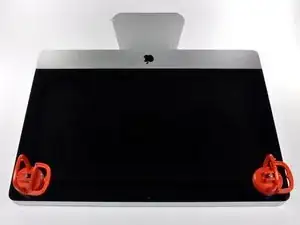
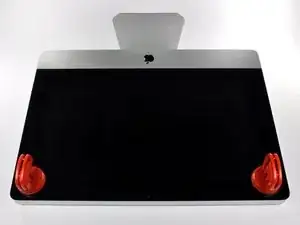
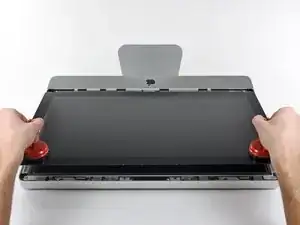
Adhiera una ventosa en los 2 angulos superiores del panel de vidrio.
-
Si sus ventosas no se pegan, limpie la superficie del vidrio y la goma de sus ventosas con un solvente liviano.
-
Insertar traducción aquí
-
-
-
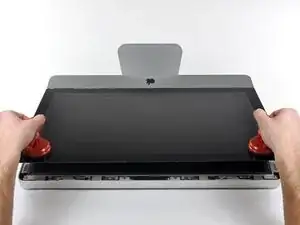
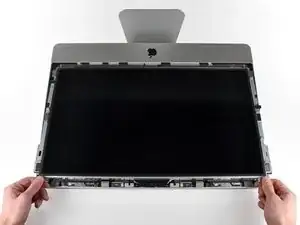
Tire despacio el panel de vidrio perpendicular a la cara del LCD con cuidado ya que hay pestañas de metal en la parte inferior del panel de vidrio.
-
Remueva el panel de vidrio hacia arriba sacando cuidadosamente las pestañas de acero y coloque sobre una superficie limpia.
-
-
-
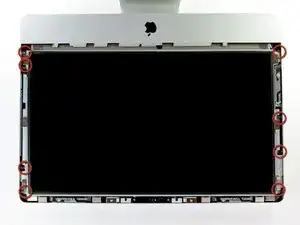
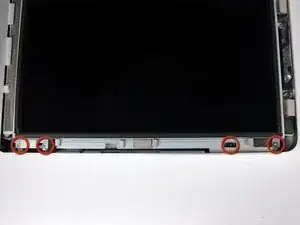
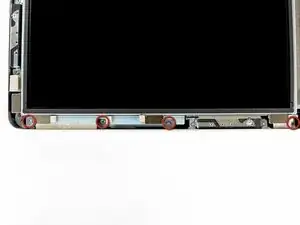
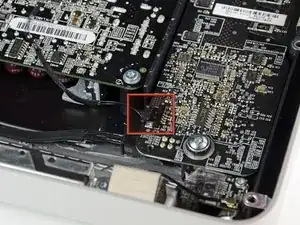
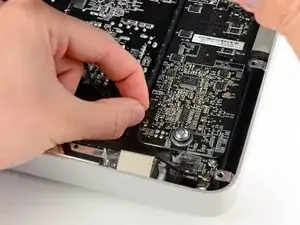
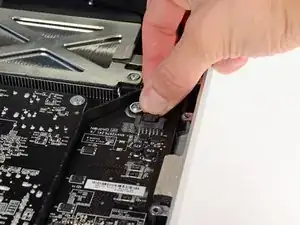
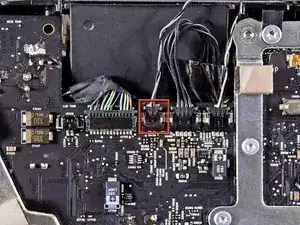
Saca el conector del cable de sincronización vertical de su enchufe en la placa de controladores LED, cerca de la esquina superior izquierda del iMac.
-
-
-
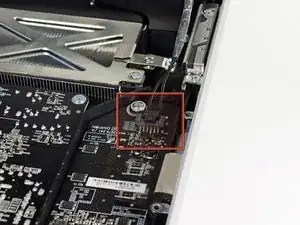
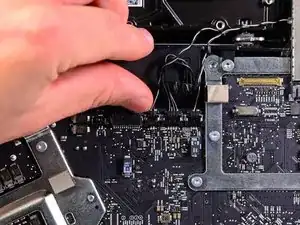
Gira la pantalla fuera de la carcasa exterior lo suficiente para desconectar el cable de alimentación de la retroiluminación LED de la placa del controlador LED.
-
-
-
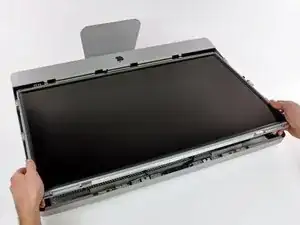
Tira con cuidado de la pantalla hacia el borde superior de su iMac y sácala de la carcasa exterior, prestando atención a los cables que puedan quedar atrapados.
-
-
-
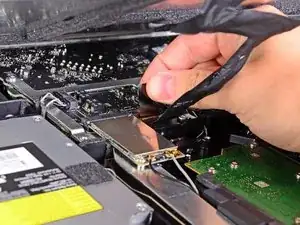
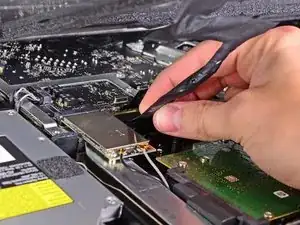
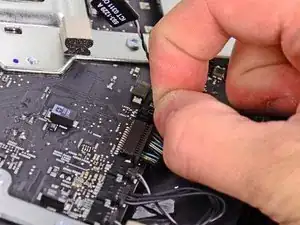
Tira del conector del sensor de temperatura del disco duro hacia el borde superior de la iMac para desconectarlo de su zócalo en la placa lógica.
-
-
-
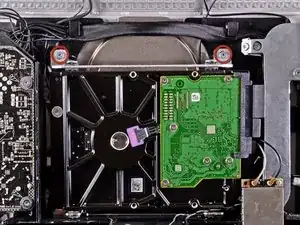
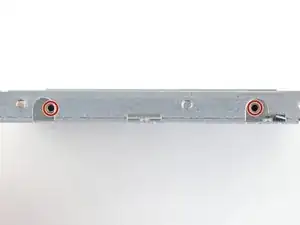
Retira los dos tornillos Torx T10 de 9 mm que sujetan el soporte superior del disco duro a la carcasa exterior.
-
-
-
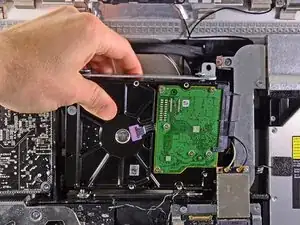
Gira ligeramente el disco duro para sacarlo de la carcasa exterior y levántalo de sus clavijas de montaje hacia el borde superior del iMac.
-
-
-
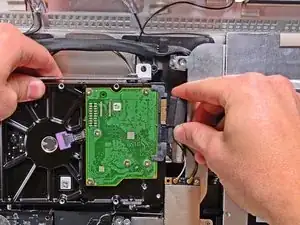
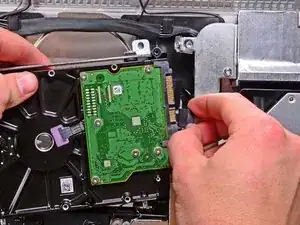
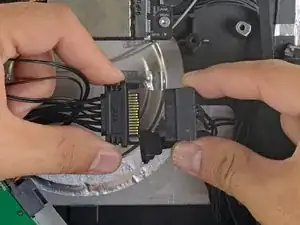
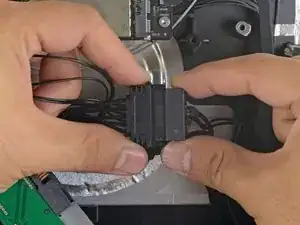
Desconecta el cable de datos SATA y el conector de alimentación SATA de sus respectivos enchufes tirando de cada conector para sacarlo del disco duro.
-
-
-
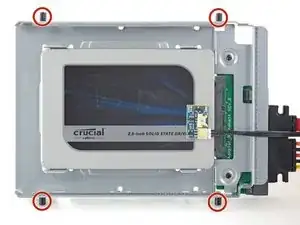
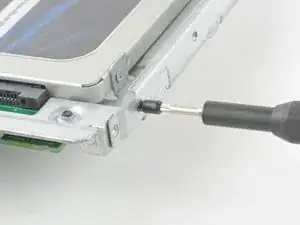
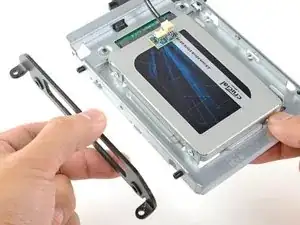
Quita los dos tornillos T8 Torx que aseguran el soporte superior de el disco duro.
-
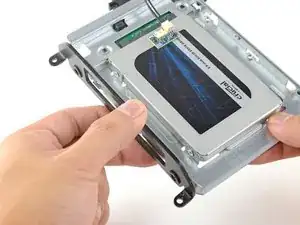
Quita el soporte superior del disco duro.
-
-
-
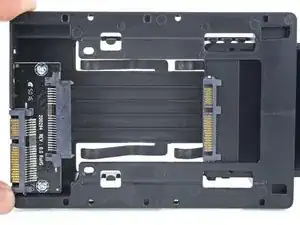
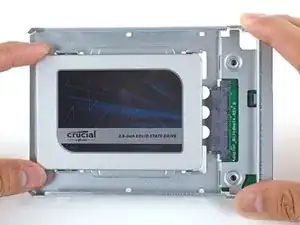
Alinea los conectores de la SSD con las tomas de la caja metálica.
-
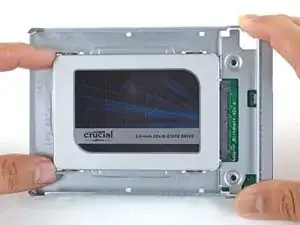
Presiona la unidad contra las tomas de la carcasa hasta que la SSD quede firmemente asentada.
-
-
-
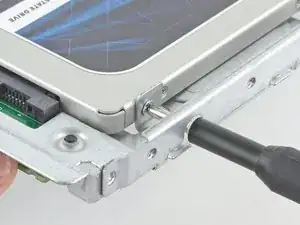
Usa un destornillador Phillips para instalar los cuatro tornillos plateados (dos de cada lado) a lo largo de los bordes del SSD para fijarlo a la caja.
-
-
-
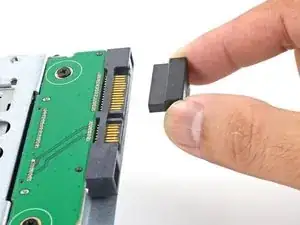
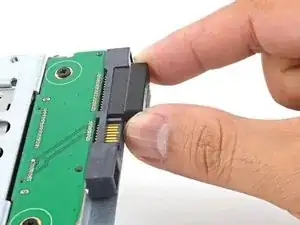
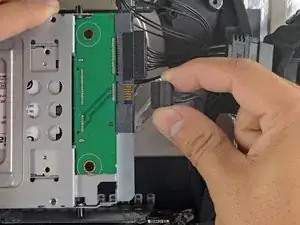
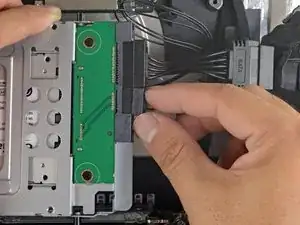
Conecta el cable de alimentación SATA habilitado para sensores incluido en el puerto del recinto.
-
-
-
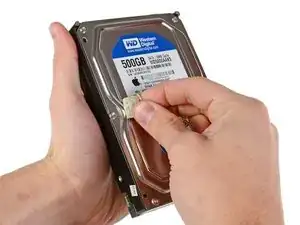
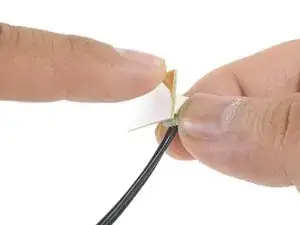
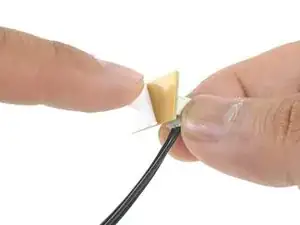
Despega el revestimiento blanco de la parte posterior de la pequeña placa del sensor de temperatura para exponer el adhesivo.
-
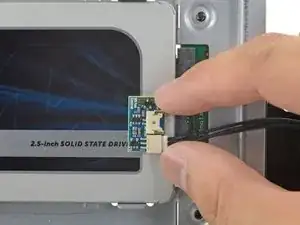
Pega la placa del sensor de temperatura a una superficie metálica expuesta del SSD, cerca del conector SATA.
-
Dobla los cables del sensor de temperatura sobrantes para que estén fuera del camino mientras instalas la caja.
-
-
-
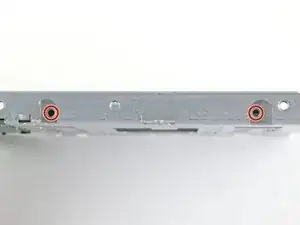
Utiliza un destornillador T8 para instalar las clavijas de montaje del viejo disco duro en los lados del recinto.
-
-
-
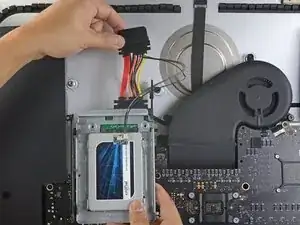
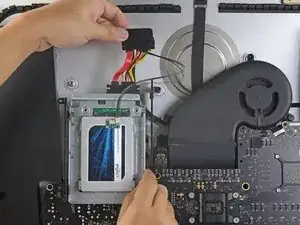
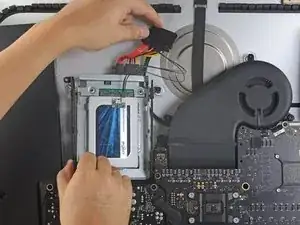
Conecta el cable de alimentación SATA del iMac al otro extremo del nuevo cable SATA habilitado para sensores.
-
-
-
Desliza el recinto del SSD en el espacio que ocupaba anteriormente el disco duro.
-
Encamina los cables SATA para que no interfieran con ningún otro componente.
-
-
-
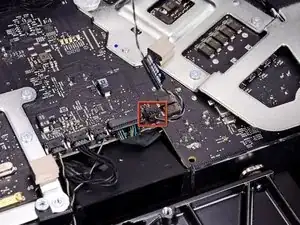
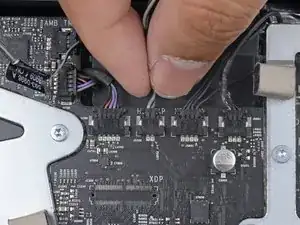
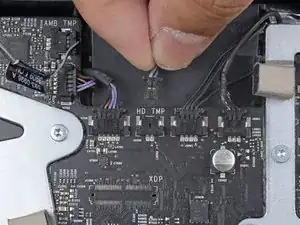
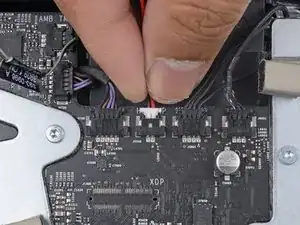
Encuentra el conector de la placa madre etiquetado como HD TMP o HDD TEMP.
-
Si el cable de temperatura anterior sigue conectado a la placa aquí, desconéctalo y retíralo. Ya no lo necesitarás.
-
Conecta el cable de dos hilos rojo-negro del sensor de temperatura al enchufe de la placa madre etiquetado como HD TMP o HDD TEMP.
-
Dirige el exceso de cable para que no interfiera con otros componentes.
-
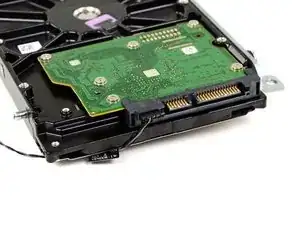
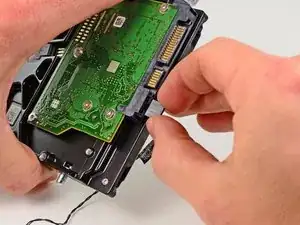
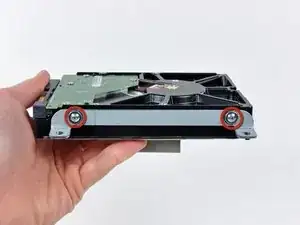
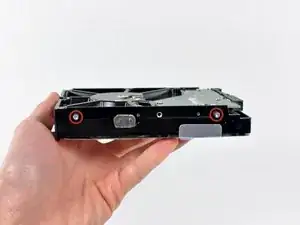
Para volver a armar su aparato, siga estas instrucciones en orden inverso.

44 comentarios
I went through all the steps and now when I attempt to boot, I hear the apple chime, but I get nothing on screen.
I thought this might have to do with a loose cord, but when I reattached the suspect cord (the display data cable) it did not resolve the problem.
Anyone have any ideas as to what could be causing the display to malfunction?
Monty -
I had this problem as well, caused by a small cable coming from the display. It is a Sync Cable with a small 2 Pin Molex connector, and it popped up and got hidden when I removed the display, which caused me to forget to re-attach it during reassembly.
capone99 -
Question for capone99: where did this cable come from? Was it one of the five specified for unplugging in this guide? Or are you saying it came loose by itself during installation?
Did anyone ever solve this? Having the same issue.
In step 14, the Apple connector for the hard drive has a locking mechanise that doesn't fit most replacement hard drives. I got an identical hard drive that doesn't have a provision for the connector. A little bit of shaving or filing of the plastic connector did the trick.
I want to use a (WD20EARX) 2TB hard drive which does NOT have a socket matching the old hard drive for the thermal sensor plug, but rather 8 jumper pins. Can I use this drive as a replacement, and if so what do I do about the thermal sensor?
Robert -
Very easy to lift the glass out. Don't jerk too hard.
kctipton -
Another comment on DATA & LCD Temp. Sensor cables: I had to remove the vertical sync, and the backlight cable, however, if you have an assistant or/can carefully rotate the screen clockwise/and then have it held up about 5" to 6" at a slight angle, you do not need to remove LCD data cable or LCD thermal cable, however - IMPORTANT: you must have a second pair of hands/or way to securely prop up the LCD. Also, don't rotate too much, since then you will pull out LCD data cable, and it renders the whole exercise moot, or can damage the cable or connector.
MaximBorzov -
You don't need suction cups. The screen, held by magnets, can simply be pried off using a very thin blade such as a screw driver and fingers.
Deepsurvival -
That's a bad idea. using a metal tool to pry off glass is likely to end with an expensive broken front glass.
Suction cups are common. Find a couple and do it the safe way. I use some cheap ones that came with iPhone repair kit.
max damage -
No need for suction cups, I just stuck my nails (short like guys usually have) between the top part of the screen and body, and it came off easily. I've never done it before, so it seems to be very easy.
Nikolas Lintulaakso -
Nails worked for me too
Rob Dale -
Just completed the replacement of the optical drive with an SSD using an OWC Data Doubler kit. Attempted to remove the optical drive without disconnecting any cables but found it a bit fiddly to orient the screen for good access. I bit the bullet and disconnected them and found the process less daunting than I imagined. Reconnecting them was similarly straightforward if you're careful.
Tip: you can skip the step for removing the optical drive thermal sensor connector from the motherboard. Still need to remove the sensor from the optical drive but you can leave that hanging and reattach it to the SSD later.
osienna -
I use Garmin GPS suction cup. Work very well
jc3Dcx -
I’ve just successfully installed a 1TB SSD in place of my optical drive thanks to the information here- thank you to everyone who has contributed!
3 comments- the procedure described here seems to vary between HD replacement and dual HD/optical drive replacement. This can be confusing at times.
Expect there to be minor differences between the layout described and what you find when you open up your iMac. There are also, surprisingly, differences between the HD enclosure description, and the article provided by ifixit.
I was able to replace the DVD/HD enclosure single-handedly without fully removing the LCD, or deconnecting any of the cables (steps 5-11). It’s a bit cramped, and fiddly, but I was not happy removing any of the cables despite watching videos, etc., since they all seemed to involve applying more force than I was comfortable with. A more detailed description of how to release them might have helped, but even here, there may be minor variations even within the 2389 model.
Good luck!
ivan birks -
I did it several times with one suction cup at the end of a kitchen brush. Once with the blade of a swiss army knive, also ok. And i’m pretty sure it works with fingernails too
Tai -
Fingernails are all you need to free the glass from its magnetic hold. If you don’t have them, slip something thin and plastic, like a spudger, at a top corner.
Max Powers -
Minha dúvida é a seguinte: após o técnico trocar o HD do meu iMac de 21,5 polegadas, a câmera parou de funcionar. Seria por causa da troca do HD? Tem solução?
Claudio -
Creio que o cabo da camera não foi plugado ou deu mau contato… ou até danificado.
glecyo@gmail.com
glecyo medeiros -
I can’t get my glass to budge. I’m replacing a cracked one and now it’s about to shatter.
jamboxmitchell -
I know that I'm replying really late but I advise to use clear tape over any cracks so the cracks don't get bigger
Jace Holmes -
Check for chips in the glass BEFORE you do this step. If there is a chip when you pull up with the suction cups you will wind up with a jagged mess. If you do have a chip I would advise covering the screen near the chip with clear tape of some kind before lifting out. Mine shattered right at the chip and the resulting glass dust cloud got all over. My solution was buying a new glass screen.
BCam -